
How enterprise freight forwarders prevent rate management systems from breaking as they grow. Learn the early warning signs and what successful companies do differently

Team Freightify
For Operations Heads, Procurement Leaders, and Regional Managers who manage 50+ offices or multi-million dollar procurement budgets.
Pricing is no longer administrative work. It is a revenue engine. And engines don't perform well when they're patched together from disconnected systems.
Most freight leaders don't say rate and quote management isn't important.
They say it isn't urgent.
Quotes are still going out. Teams are coping. Customers aren't pushing back loudly. On the surface, the business looks fine.
And that's exactly how this problem survives for years before it starts hurting in ways no one can ignore.
How the Drift Begins
It doesn't start with failure. It starts with small adjustments.
Someone double-checks a rate before sending a quote.
A region keeps its own version because the main one isn't fully reliable.
Sales waits for confirmation instead of replying quickly.
A contract rate doesn't reach every office consistently.
Everyone is working hard. Everyone is trying to do the right thing.
One freight leader summed this reality up perfectly:
"Before we didn't have anything. We were wasting way too much time looking up rates… and sometimes people didn't look up the right ones."
— Lasse Andersen, Head of Procurement, Freja Transport and Logistics
Nothing was broken. People were compensating. That works for a while.
The Question Most Leaders Hesitate to Answer
As the organisation grows, the system keeps running only because people absorb more effort.
Which leads to a simple but uncomfortable test:
If three offices quoted the same shipment today, would you expect the same price back?
Not "roughly the same". Not "close enough." Actually the same.
Most leaders pause here.
That pause matters. It reveals the gap between how pricing is supposed to work and how it really moves through the organisation.
The Impact Doesn't Arrive Dramatically
A competitor replies faster.
An outdated rate slips through.
Teams spend hours reconciling instead of selling.
Customers notice pricing differences by location.
These aren't big enough individually to trigger alarms. But together, they slow the organisation down and quietly erode margins.
Which is why rate and quote management often stays low on the priority list.
Waiting feels neutral. It isn't.
Why Acting Later is Harder Than Acting Earlier
Over time, workarounds become the system.
Files multiply.
Dependencies form around specific people.
Fixes touch more teams than expected.
By the time leadership steps in, addressing the issue is no longer a clean improvement. It's disruptive.
This is where many leaders realise that delaying didn't avoid cost, it just delayed visibility.
Why Freja Transport and Logistics Chose Not to Wait
Freja didn't change how they managed rates and quotes because they were struggling.
They noticed early signs that wouldn't scale:
Spreadsheets were working for individuals, but not for a growing, multi-country freight organization
Rate differences across offices were increasing
Rather than wait for pressure to force the decision, leadership acted early.
Here's what they implemented:
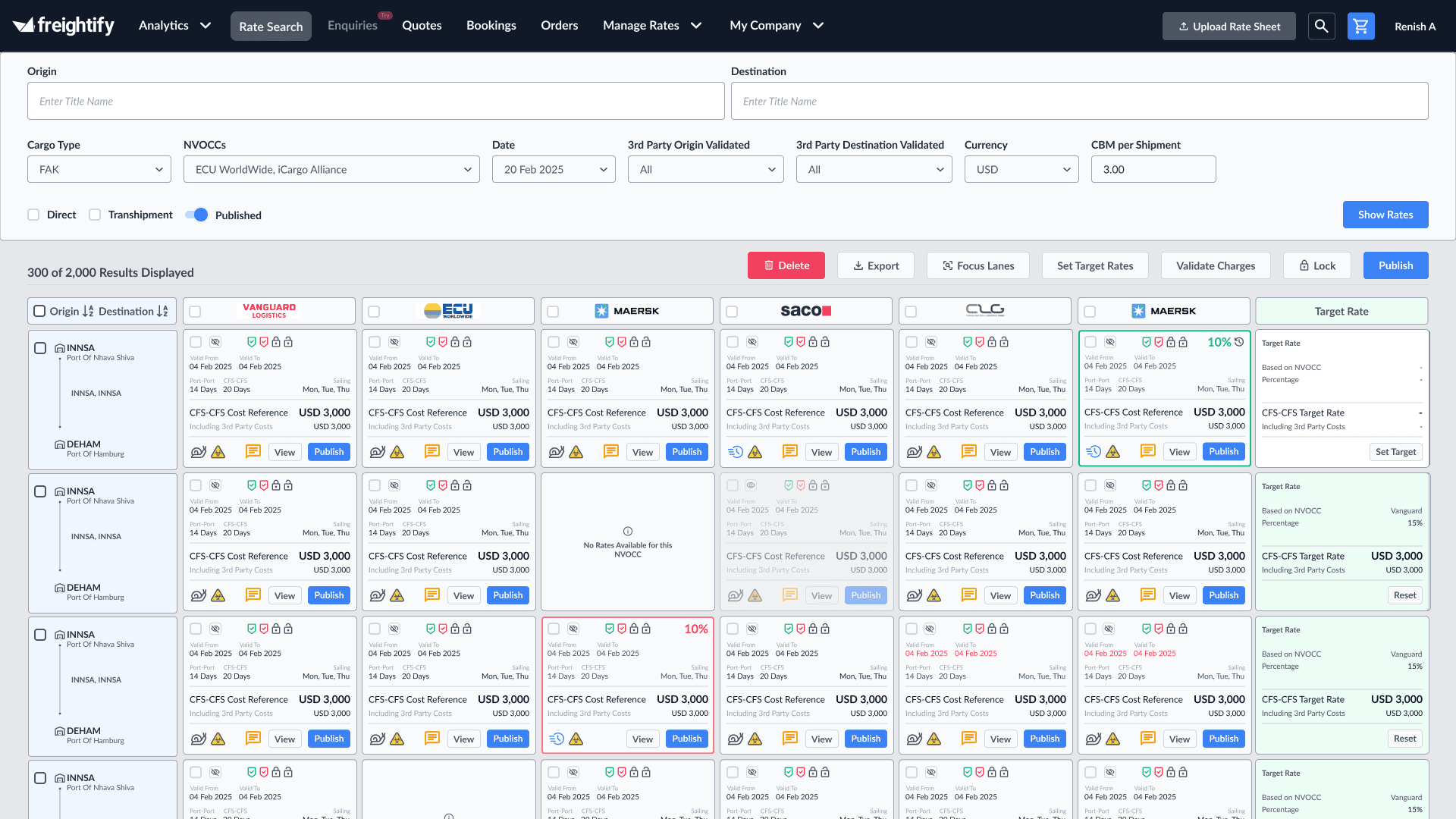
Instead of relying on spreadsheets and manual updates across multiple offices, they implemented a unified rate management system that:
Centralized rate management - Single source of truth for all carriers, contracts, and spot rates across 30+ users across regions.
Ensured pricing consistency - All offices quote the same lane at the same price (within agreed parameters)
Provided visibility - Procurement, sales, and operations could see exactly what rates were quoted, by whom, and why
The procurement and business development leadership internally pushed for adoption across offices and regions.
The Results (12 months after implementation):
Freja saves 10–15 minutes per quote. That's a substantial ~2.5 hours/ day time savings for a user who handles at least 10 quotes per day.
No more missed Opportunities: "colleagues realize they actually have better options than they thought, so we don’t miss opportunities"
That's not just a tool or a process change. That's how revenue moves through the organisation seamlessly.
What made the difference for Freja wasn't complexity. It was clarity from early on from their leaders.
When every office had access to the same information, at the same time, decisions moved faster and margins stayed protected.
A Question Worth Considering
If your teams are already spending time compensating today, checking, reconciling, adjusting, what does that look like a year from now?
Because rate and quote management rarely becomes urgent overnight.
It becomes unavoidable over time.
The real decision isn't if it will demand attention.
It's whether you address it on your own terms, or when the business leaves you no choice.
Final Thought
Pricing is no longer administrative work. It's how revenue flows through the organisation. Anything that quietly slows or fragments that flow eventually surfaces, whether planned for or not.
The question is timing. And clarity.
Frequently Asked Questions
Q: What is data-driven decision-making in freight forwarding?
It’s the process of using centralized, structured data and AI insights to drive procurement, pricing, and quoting decisions across global teams.
Q: Why is it difficult for freight forwarders to become data-driven?
Because most use legacy TMS systems and Excel workarounds that trap information in silos, making collaboration and transparency difficult.
Q: What is decision intelligence in logistics?
Decision intelligence connects data, people, and AI systems to continuously learn from transactions—transforming experience into scalable foresight.
Q: How does AI improve freight pricing and procurement?
AI learns from historical contracts, quotes, and bookings to suggest optimal pricing, detect anomalies, and improve margin consistency.
Stay updated with Freightify
Subscribe to our blog for the latest updates and insights delivered to your inbox.
Suggested Stories
Your LCL Operation Has a Revenue Leak. Most Forwarders Never Find It.
Freight forwarders in the US and Europe lose LCL quotes daily — not from bad rates, but broken pricing workflows. See how the right LCL pricing software fixes this.
Wisor vs Freightify: Which Rate Management Platform Should You Choose? [2026]
Data-driven comparison based on 88 reviews. Implementation speed, multi-office capabilities, accuracy guarantees. 5-minute read.