
Explore the top 10 global supply chain risks for 2025, including geopolitical tensions, cyber threats, and data issues. Learn strategies to reduce these risks with smart, tech-driven solutions like Freightify.

Team Freightify
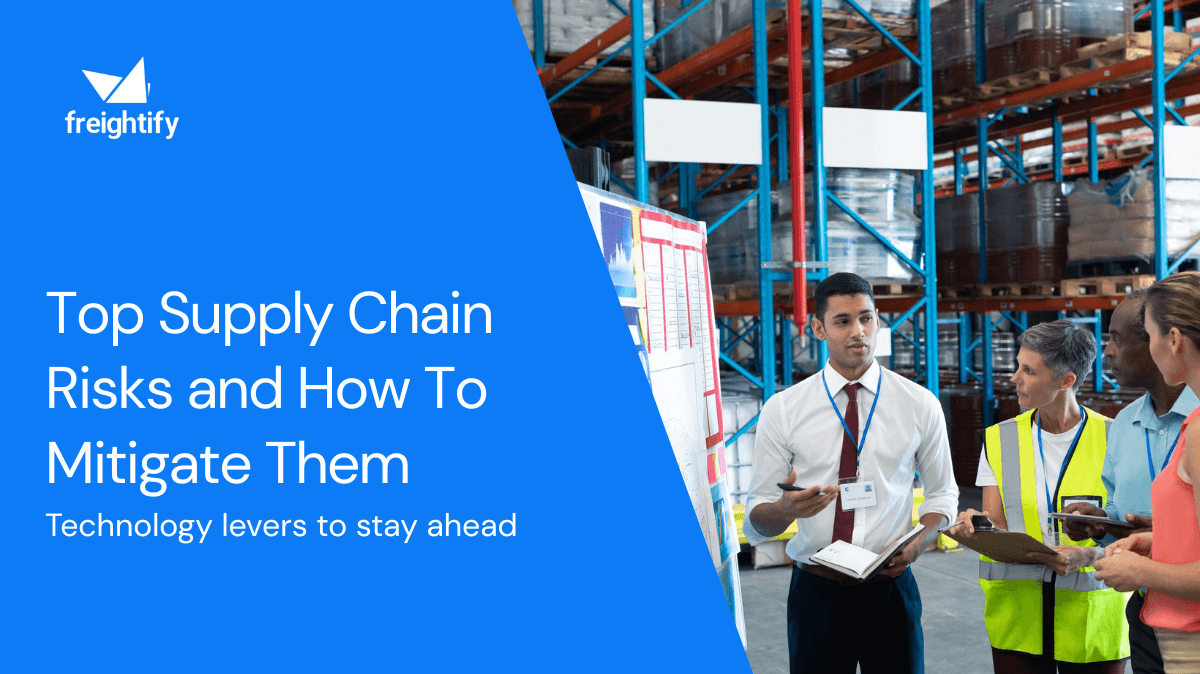
Various risks like geopolitical changes, climate and cyber threats could impair global supply chains in 2025.
Inefficiencies in procurement and gaps in data quality can adversely affect resilience.
Diversifying and proactively planning risks can mitigate supply chain risks.
Freightify offers real-time visibility and improved agility to reduce risks.
A technology-driven risk management approach is crucial to the growth and efficiency of the supply chain.
Freight companies regularly experience disruptions in the supply chain. Instead of accepting this as the new normal, the industry must understand the reasons and use new methodologies to build resilience. Global logistics networks are fragile, as evidenced by the Red Sea shipping crisis or semiconductor shortages. According to a survey by Blue Yonder, 84% of companies faced some kind of supply chain disruption in 2024.
Supply Chain Risks
The flow of goods and services from suppliers to end customers is subject to disruption or vulnerability. These could be internal or external. These are called supply chain risks.
These risks emanate from various factors, like geopolitical relations or events, natural calamities, economic downturns or cyberattacks. Sometimes, even the procurement process might be inefficient.
Top 10 Global Supply Chain Risks in 2025
Here are the top ten risks that freight organizations must monitor to mitigate supply chain risks.
1. Geopolitics
Rising tensions in Southeast Asia, Eastern Europe and the Middle East impact trade routes and tariffs. If tensions result in disruptions, these shifts in geopolitical relations can lead to border closures and, therefore, transport rerouting.
There could also be complexities in regulations from country to country.
2. Economic Instability
Global inflation is a constant phenomenon that results in currency fluctuations. Interest rates are also impacted, making company cost structures unpredictable.
These macroeconomic changes directly impact procurement budgets and forecasts for demand.
3. Procurement Inefficiencies
Many inefficiencies in the procurement process, like real-time rate visibility or long and tedious manual processes, can cause delays. Such delays, in turn, cause an unwanted surge in costs. Systems need to be agile for procurement to go smoothly without bottlenecks.
4. AI/ML and Emerging Technologies
While AI and Automation are transforming logistics, adopting these technologies can also cause several problems if they are not integrated properly. These problems could include cybersecurity or operational risks.
If your knowledge of AI is limited, its implementation will be flawed, which is a bigger risk than not integrating any AI tools. This can cause mismatches in supply or even compliance issues.
5. Evolving Role of the CSCO
In this world of automation, the role of the CSCO or Chief Supply Chain Officer, encompasses broader aspects. This includes sustainability and digital transformation. If the CSCO's leadership has too many gaps, it can lead to systemic risks in the supply chain.
6. Extreme Weather Events
Many parts of the world face climatic disruptions from time to time, such as heat waves, floods, or hurricanes. These disruptions are also consistently increasing in frequency and intensity. During such climatic disruptions, ports and transportation infrastructure become vulnerable. Even storage facilities are affected.
7. Environmental, Social and Governance (ESG)
Globally, consumers are increasingly putting pressure on ESG compliance, so these aspects are regularly scrutinized. Your brand's reputation can suffer if non-compliance or greenwashing claims are made. Penalties could also be imposed, which can lead to further cost risks.
8. Cyber-Attacks
Cyberattacks, such as ransomware and digital hacking, are rising in the logistics industry. If a cyber threat occurs, it can cripple logistics operations by halting warehousing and tracking.
9. Data Integrity and Quality
Data must be perfect for logistics to function smoothly. Poor data studies can result in poor demand planning and missed delivery timelines, and the supplier can get misaligned in this process. If data is inaccurate, it adversely affects real-time decision-making in the supply chain, leading to heavy losses.
10. T-Shaped Procurement Teams
Generalist procurement teams indeed offer flexibility. However, they also lack many factors, like specialized logistics skills. This can hinder strategic decision-making, putting the supply chain at risk.
Mitigating Risks with Supply Chain Risk Management in 2025
Risk management is no longer a reactive or defensive strategy. It is now a value-adding strategy that enables growth. Logistics companies must keep track of vulnerabilities in the supply chain process. This can be done with various steps, like evaluating potential impact hotspots and planning for contingencies.
This can help companies reduce risks in terms of costs and reputation. Being proactive about supply chain risk management strengthens your response to disruptions, giving your company a competitive edge.
Practical Strategies to Mitigate Supply Chain Risks in 2025
Diversifying Suppliers
One of the first steps logistics companies can take to mitigate risks is to avoid over-dependence on a single vendor or region. Companies must spread their sourcing across countries. This will spread out the risks and reduce political or climate-related uncertainties.
Building Strong Relationships with Suppliers
Building strong relationships with your suppliers is crucial. This enables transparency and mutual problem-solving when a crisis arises.
Insurance and Financial Strategies
One smart strategy that logistics companies can adopt is prioritizing protecting high-value shipments. They can do this by insuring and hedging to navigate cost fluctuations.
Strategically Managing Supply Chain Risk
The first step is to identify the various risks involved. Then, you make a predictive assessment of the impact that could happen if these risks come true. If some or all of these risks come true, what steps can you take to mitigate them?
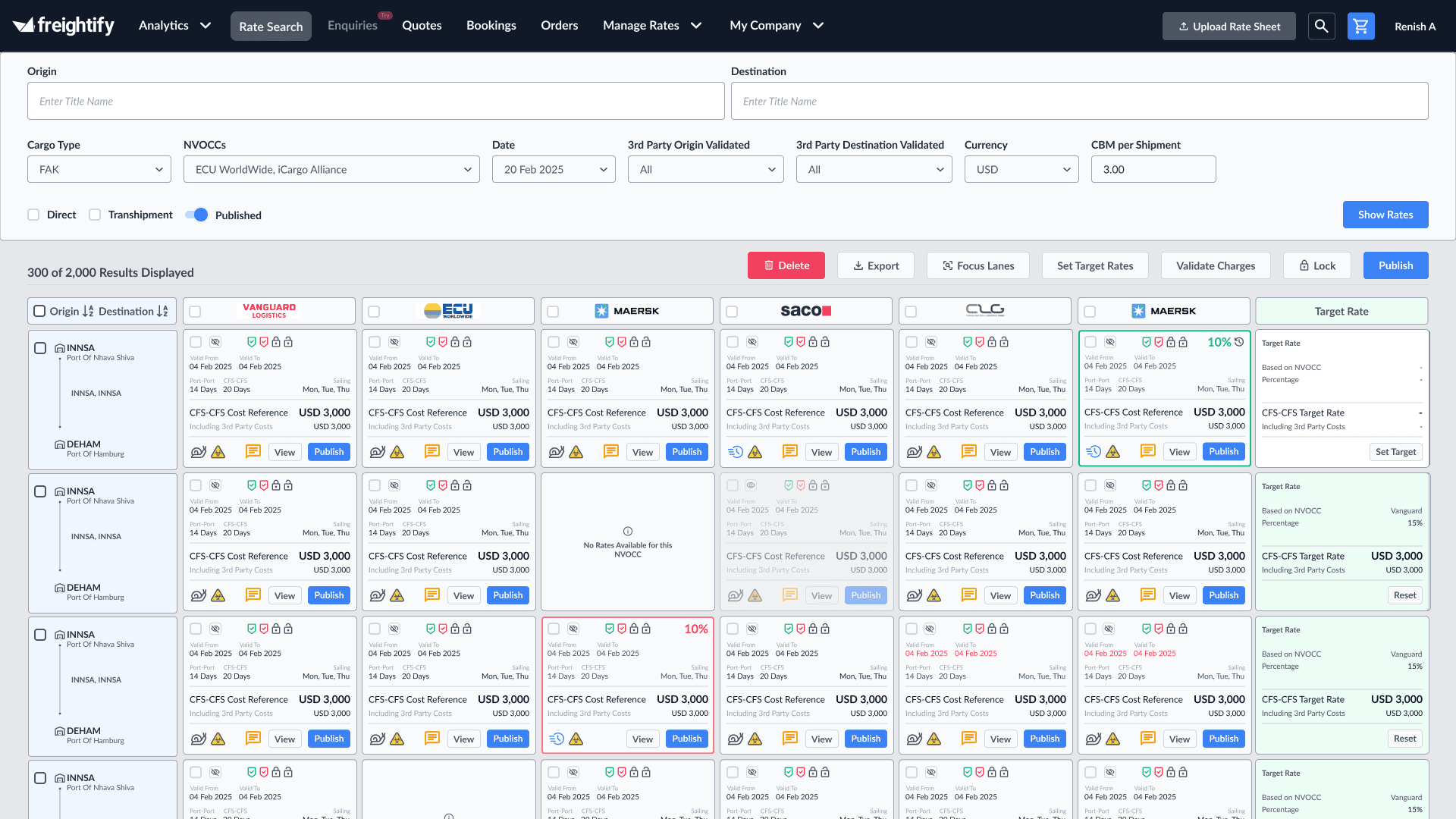
Digital platforms like Freightify enable real-time visibility of rates and offer rate comparison. This helps an efficient production workflow. Companies must leverage technology to act swiftly and smartly during the supply chain process.
Conclusion
In 2025, freight companies can leverage opportunities globally. The year also indicates some geopolitical challenges. Companies must invest in robust supply chain risk management. It will help build strength and customer trust, which will, in turn, increase profitability.
Platforms like Freightify offer a comprehensive solution to supply chain risks. You can monitor risks consistently, respond to them in real time and make bolder decisions. All these steps will help mitigate supply chain risks.
FAQs
1. How does Freightify help mitigate supply chain risk?
Freightify offers real-time visibility and quote comparisons. It also provides centralized procurement tools to help your company respond swiftly to a potential crisis.
2. Can Freightify reduce procurement inefficiencies?
Yes, Freightify can reduce procurement inefficiencies. It doesn't depend on manual processes, which contain error risks. Freightify also offers rate comparisons. It brings all procurement decisions under one umbrella, making the process time-efficient and transparent.
3. How does data integrity affect logistics decisions?
Inaccurate data results in suppliers making the wrong choices and delays in shipment. This leads to cost miscalculation.
Frequently Asked Questions
Q: What is data-driven decision-making in freight forwarding?
It’s the process of using centralized, structured data and AI insights to drive procurement, pricing, and quoting decisions across global teams.
Q: Why is it difficult for freight forwarders to become data-driven?
Because most use legacy TMS systems and Excel workarounds that trap information in silos, making collaboration and transparency difficult.
Q: What is decision intelligence in logistics?
Decision intelligence connects data, people, and AI systems to continuously learn from transactions—transforming experience into scalable foresight.
Q: How does AI improve freight pricing and procurement?
AI learns from historical contracts, quotes, and bookings to suggest optimal pricing, detect anomalies, and improve margin consistency.
Stay updated with Freightify
Subscribe to our blog for the latest updates and insights delivered to your inbox.
Suggested Stories
Your LCL Operation Has a Revenue Leak. Most Forwarders Never Find It.
Freight forwarders in the US and Europe lose LCL quotes daily — not from bad rates, but broken pricing workflows. See how the right LCL pricing software fixes this.
Wisor vs Freightify: Which Rate Management Platform Should You Choose? [2026]
Data-driven comparison based on 88 reviews. Implementation speed, multi-office capabilities, accuracy guarantees. 5-minute read.