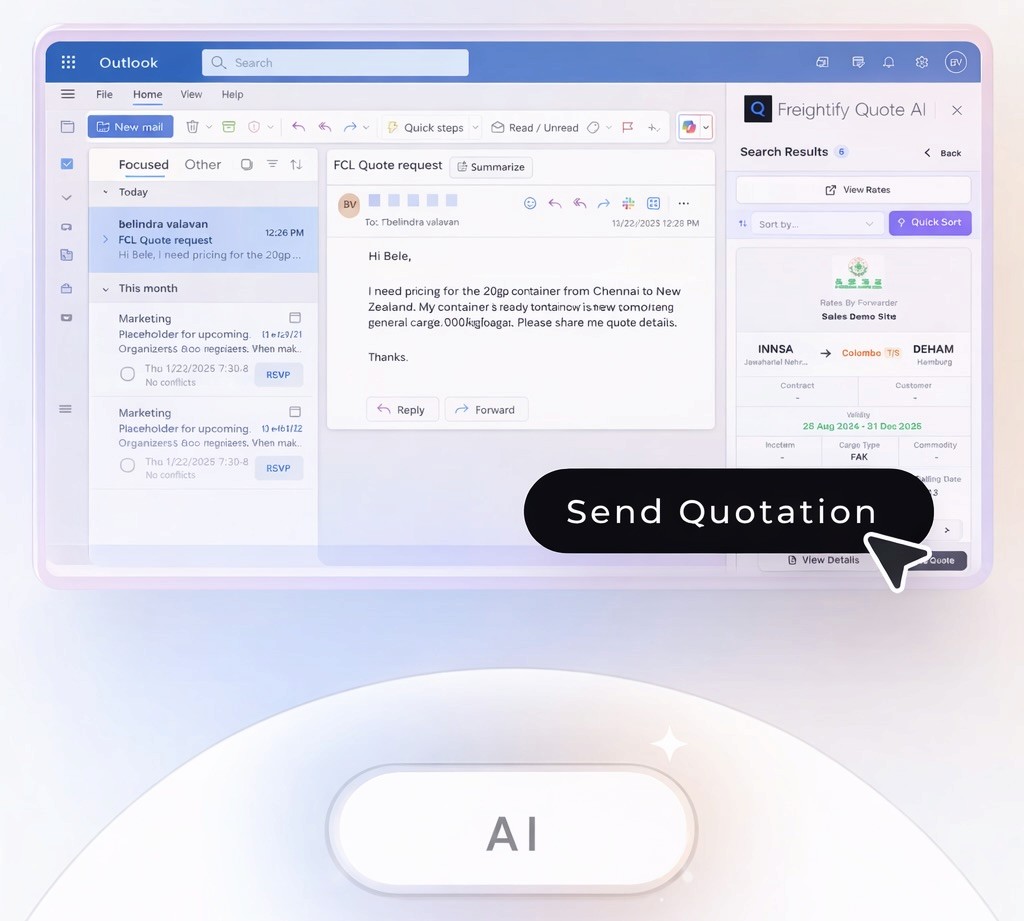
Discover how freight forwarders can leverage technology like dynamic pricing to boost revenue and profit margins in the digital age.

Team Freightify

Freight forwarders can boost profitability and efficiency by adopting technologies like AI, blockchain, and dynamic pricing, helping them stay competitive in a rapidly evolving market.
Advanced technologies such as AI for forecasting, dynamic pricing for real-time rate adjustments, and blockchain for enhanced security can streamline operations and uncover new revenue streams.
Implementing CRM systems allows forwarders to manage customer interactions more effectively, personalize services, and identify upsell opportunities, improving overall client satisfaction.
Modern freight forwarders sit at the center of a complex network connecting various stakeholders such as shipping lines, trucking companies, port authorities, and customs officials. Their actions can significantly impact supply chains both upstream and downstream. As most of their partner stakeholders go digital, forwarders cannot be left behind. While several are adopting new tech systems, others are not.
Due to this, freight forwarders are leaving significant money on the table. In an industry where profit margins typically hover between 2-5%, future-focused companies leverage technology to push those figures into double digits. The key difference lies in a strategic approach to digital transformation that goes beyond basic automation. This article reveals how innovative forwarders use new tech like artificial intelligence, blockchain, and dynamic pricing to cut costs. We look into how forwarders can uncover new revenue streams, dramatically boosting profitability.
Forwarders can significantly impact their revenue and profit margins by implementing tech solutions. Let’s look at some of these in detail.
AI and Machine Learning
Artificial Intelligence (AI) and Machine Learning (ML) are revolutionizing demand forecasting in freight forwarding. Using AI and ML in forwarding helps teams calculate delivery timings with precision. Thanks to these technologies, systems can factor in aspects like route traffic, freight types, shipping windows, and more, giving accurate visibility into freight.
These technologies analyze vast amounts of historical data to predict future shipping volumes and patterns with remarkable accuracy. These systems help with more accurate capacity planning and resource allocation. Advanced AI also helps with route optimization.
AI assistants or chatbots provide 24/7 customer support, answering queries and tracking shipments. As AI works with heaps of historical data, forwarders can leverage the predictive power of AI and ML in connection with data to improve negotiation power with carriers. From automated carrier matching to consolidating and tracking shipments, AI and ML can help forwarders simplify their business exponentially.
Even smaller forwarders can leverage AI through cloud-based solutions that offer affordable, sophisticated forecasting tools. By starting with basic predictive analytics and gradually expanding capabilities, forwarders of all sizes can reap the benefits of AI-driven forecasting.
Dynamic Pricing Models: Unlocking Revenue Potential
As geopolitical situations are always in flux, fuel prices are impacted constantly. With such volatile markets, the traditional pricing model exposes the product and service providers to the risk of financial loss unless they inflate their prices upfront. And that, on the other hand, can put their margins down.
Dynamic pricing allows forwarders to adjust their rates in real time based on market demand, capacity, and other factors. Dynamic pricing can enable forwarders to dish out instant freight quotes to cargo owners, based on their market insights into supply and demand. This strategy can significantly boost profitability and competitiveness.
Rate management or adding rates in bulk via automated systems, a function of dynamic pricing, allows forwarders to manage multiple locations and other details. Dynamic pricing helps maximize revenue during peak periods and increase market share during off-peak times. It also allows for better capacity utilization. While some forwarders worry about customer reactions to fluctuating prices, many shippers appreciate the transparency and opportunity for better deals during slower periods.
Blockchain Technology
Blockchain technology is setting new standards for security and transparency in freight forwarding. This decentralized digital ledger technology allows freight forwarders to do away with physical paperwork and replace it with smart contracts, removing intermediaries in the process. Blockchain-secured contracts are often backed by AI or ML-driven workflows.
Smart contracts, which are self-executing agreements governed by predefined conditions, streamline tasks like customs clearance, payments, and adherence to compliance standards. This also reduces the risk of errors and protects forwarders from fraud.
In fact, blockchain makes for immutable record-keeping. Once data is keyed in, it cannot be altered without explicit approval from all participants in the value chain, reducing fraud and disputes. It also allows for enhanced traceability, as every step of the shipping process is recorded and easily accessible.
Blockchain tech standards have also been built to help stakeholders conform to international trade regulations. Every stage within the supply chain is documented and transparent, enabling companies to showcase adherence to compliance standards. This means reduced risk of penalties or resulting delays.
The global blockchain technology market size was valued at USD 17.46 billion in 2023. It is expected to grow at a compound annual growth rate (CAGR) of 87.7% from 2023 to 2030. For forwarders looking to adopt blockchain, a phased approach is recommended. Start by identifying a specific process, such as bill of lading management, and implement a blockchain solution for that particular aspect before expanding to other areas.
CRM Systems: The Key to Enhanced Client Relationships
CRM systems have been in use for a long time. The customer relationship management (CRM) system is critical for business growth today, and it holds true for modern freight forwarders as well. A well-implemented CRM can transform customer interactions and drive business growth.
A CRM system offers centralized customer data management. It can also help forwarders automate follow-up reminders and performance analytics for client accounts. Finally, it can easily integrate with other operational systems in the forwarders’ tech stack.
According to a survey, 37% of small businesses find CRM reporting & analytics tools the most beneficial to supporting company goals. CRM systems provide a 360-degree view of customer interactions, enabling forwarders to offer personalized service and identify upselling opportunities.
Practical Steps for Technology Adoption
For forwarders ready to embrace digital transformation, here's a step-by-step approach:
Assess current technological capabilities
Conduct a thorough audit of existing systems and processes. Evaluate your current tech stack to find out where inefficiencies exist. Evaluating the strengths and weaknesses of your CRM platform, freight booking, visibility tools, and more will help key stakeholders identify outdated systems.
Identify priority areas
Determine which aspects of your business would benefit most from technological upgrades. This may include modernizing your workflows for freight bookings, rate management, and quotations. You might want to enhance customer experience by providing real-time visibility via self-service portals. Prioritize the pain points, which, when upgraded, directly impact your bottom line.
Research potential solutions
Explore options that fit your specific needs and budget. Dig deep into the nuances behind cloud-based software-as-a-service (SaaS) platforms that can be deployed quickly without heavy IT investment or upgrades. You want platforms that offer robust APIs, connecting disparate systems seamlessly. Carefully look into vendors before selecting the right partner.
Create an implementation roadmap
Develop a phased plan for introducing new technologies. Roll out solutions in stages instead of going all-in with a big splash. Let your teams adapt and refine the new processes before taking the next step. Pick quick wins that can show the value of digital transformation and create enthusiasm for new changes.
Invest in training
Ensure your team is well-prepared to use new tools effectively. Provide comprehensive training for both technical skills and change management to your team. Encourage learning and questions and let important stakeholders chip in with concerns. Let your employees become champions of the new technology.
Embracing Digital Tools: Your Roadmap To Sucess As A Modern Forwarder
The future of freight forwarding is undeniably digital. By embracing technologies like AI, blockchain, and dynamic pricing, forwarders can dramatically increase their efficiency, profitability, and customer satisfaction. CRM systems further enhance these benefits by fostering stronger shipper relationships.
The time to act is now. Every step towards digital transformation counts, and can yield significant results.
Forwarders can partner with companies like Freightify. With a comprehensive platform that can help forwarders digitalize their rate management operations, Freightify can help you manage freight quotations, track your shipments, and more. Embrace the tech-driven revolution and position your business for long-term success in this dynamic global marketplace. Connect with us today.
Frequently Asked Questions
Q: What is data-driven decision-making in freight forwarding?
It’s the process of using centralized, structured data and AI insights to drive procurement, pricing, and quoting decisions across global teams.
Q: Why is it difficult for freight forwarders to become data-driven?
Because most use legacy TMS systems and Excel workarounds that trap information in silos, making collaboration and transparency difficult.
Q: What is decision intelligence in logistics?
Decision intelligence connects data, people, and AI systems to continuously learn from transactions—transforming experience into scalable foresight.
Q: How does AI improve freight pricing and procurement?
AI learns from historical contracts, quotes, and bookings to suggest optimal pricing, detect anomalies, and improve margin consistency.
Stay updated with Freightify
Subscribe to our blog for the latest updates and insights delivered to your inbox.
Suggested Stories
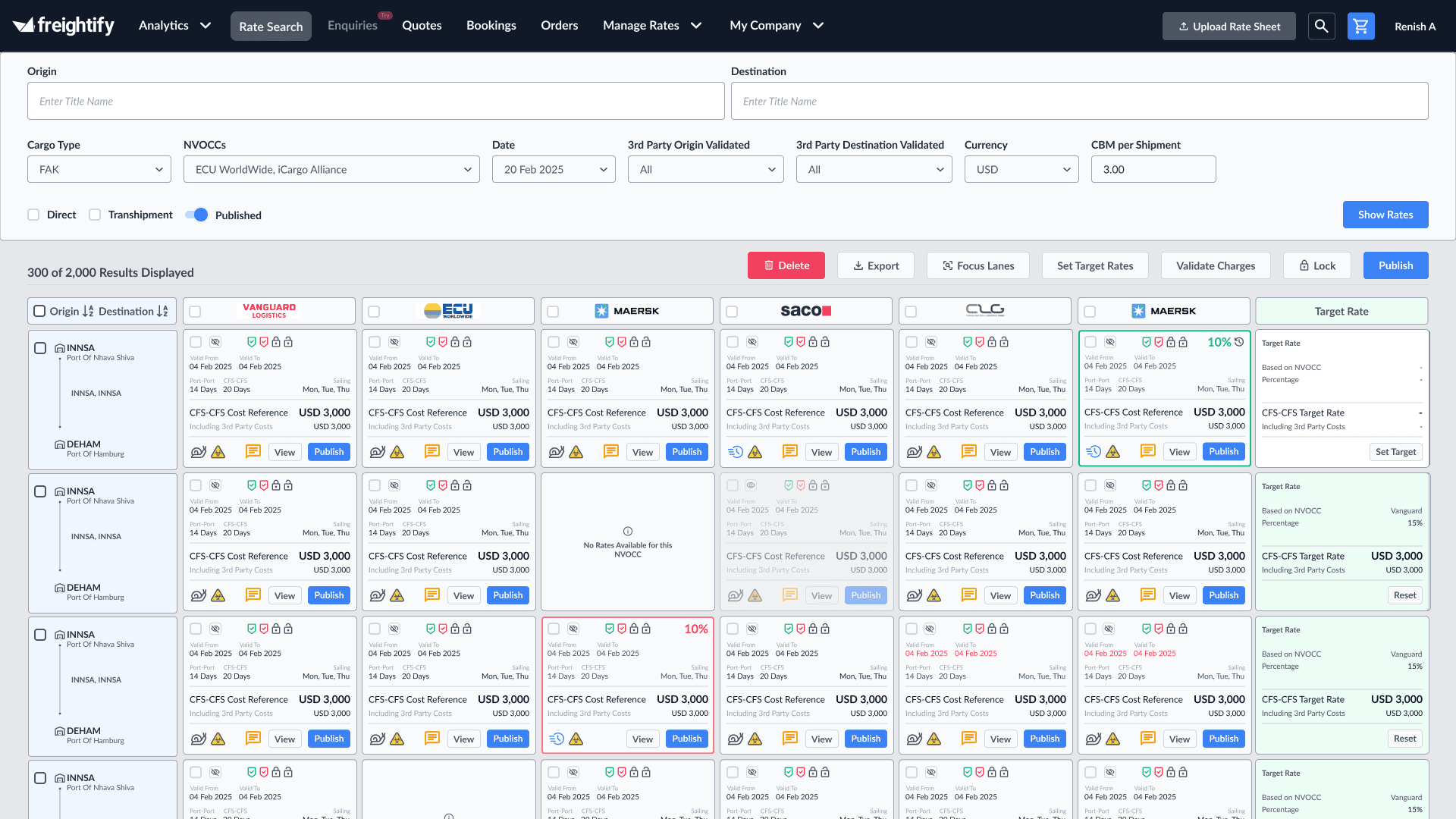
Your LCL Operation Has a Revenue Leak. Most Forwarders Never Find It.
Freight forwarders in the US and Europe lose LCL quotes daily — not from bad rates, but broken pricing workflows. See how the right LCL pricing software fixes this.
Wisor vs Freightify: Which Rate Management Platform Should You Choose? [2026]
Data-driven comparison based on 88 reviews. Implementation speed, multi-office capabilities, accuracy guarantees. 5-minute read.