
Discover proven strategies to cut down ocean freight costs while maintaining efficiency. Learn how Freightify helps streamline rate comparisons, avoid hidden charges, and simplify your shipping process.

Team Freightify

Market awareness and employing good strategies for freight planning are essential.
By teaming with trustworthy service providers, a thorough understanding of customs and clearance can increase savings.
Tools like the ROI calculator and Freightify’s Quotation Management Software help manage rates and compare them.
Planning and choosing optimum routes can decrease your freight expenses.
Better collaboration with carriers leads to reasonable rates.
Ocean freight costs have become crucial for businesses due to increasing fuel prices and container shortages worldwide. Port congestion is rising, leading to a further surge in ocean freight costs.
The average cost of shipping a 40-ft container in 2024 reached $5,900 in July 2024, the highest value on record. Rising container charges and fuel costs are squeezing freight companies’ profit margins. However, there are ways for freight companies to manage their shipping costs without going haywire while also maintaining high quality and efficiency.
Ways to Bring Down Freight Costs
To lower freight costs, freight companies need not necessarily compromise on the quality. It must be a combination of good strategy and efficiency. Here are some essential factors that affect your final shipping expenses:
Understand Your Target Market
What are the seasonal demand trends in your target destination? What import regulations are in effect? Asking these questions and understanding consumer preferences in your target destination helps you plan better and avoid expensive re-routing during peak season. Your inventory turnover automatically improves once you know what is selling in which regions.
Pick the Most Suitable Freight Provider
Make a list of all competing freight providers and make an objective comparison. Study their expertise in your trade route and the costs involved with each of them. Understand how technologically advanced they are and if they are keeping up with it. The reliable ones will help you avoid hidden charges and unexpected expenses.
Does the Provider Have a Reliable Global Network
It is pivotal that the freight provider has a robust global network. This offers flexibility during global disruptions. When the provider has a global footprint, they can quickly switch to faster alternatives, resulting in cost-effective routing or container availability.
Reduce Transportation Costs
Triangulation is a good way to reduce costs. Compare prices and consolidate shipping. Being proactive in your reverse logistics planning always helps you opt for the most cost-effective mode.
Be Thorough with Customs Clearance Procedures
Errors in the documentation can delay your goods. If goods are misclassified, they can result in detention charges. Thoroughly know your produce HS codes and spend enough time preparing your paperwork. Always stay updated on regulations to reduce penalties.
A Checklist to Reduce Ocean Freight Costs
Get clarity on the business: Be crystal clear on your company’s goals. What is more important to you? Speed or cost.
Be aware of the market rates: Constantly track market rates and update yourself every week. Identify booking windows when the rates are optimal.
Choose the mode of shipment best suited for you: There are two types of container shipments: FCL (full container load) and LCL (less than container load). Choose wisely based on the volumes and timelines.
Make sure to audit your quotations: Freightify’s Quotation Management Software offers rate comparisons and auditing. This will help prevent billing discrepancies.
Be proactive and implement SOPs: Set up Standard Operating Procedures for each shipping process to avoid confusion.
Triangulation: Use cross-trade routes. They help combine import and export shipments, decreasing the number of empty containers.
Avoid unnecessary charges by choosing optimum routes: Timely coordination with ports and clearing agents is advised. This helps avoid detention fees and demurrage. Just because a route is shorter doesn’t mean that it will be cheaper. A shorter route might have inefficient customs or higher handling costs. Evaluate reliability and other factors to arrive at the optimum route.
Optimize cargo packing: The more you fit in a container, the smarter you have packed. Use modern modular packing and appropriate dunnage.
Know your terms of sale and shipment: It is essential to choose the right Incoterms, like FOB or CIF. This helps avoid unwanted responsibilities. There are several rate covers, like bunker charges and security surcharges. Understand each of them thoroughly.
Consolidate your shipments: Many freight companies head to the same destination. Time your shipments so that you can group them, as this will reduce freight costs. Last-minute shipments are expensive. Plan better to avoid emergency shipments.
Final Word
It’s crucial to make smarter and faster decisions on all aspects of shipping. Negotiating better rates is key to controlling ocean freight costs. Proactive planning and opting for modern technology are also pivotal.
Use platforms like Freightify for hassle-free quotation management and real-time rate discovery. The platform offers many tools to lower costs and increase freight transparency.
FAQs
1. How can Freightify help reduce freight costs?
The Freightify Quotation Management Software helps you compare real-time rates and smoothens the quotation process. Freightify also helps with auditing invoices to avoid overcharges.
2. Is LCL cheaper for small shipments?
LCL may seem cheaper for small shipments but usually has a higher transit period and handling charges. In the long run, combining your small shipments into an FCL is more prudent.
3. What are ways to avoid unnecessary charges during shipment?
Ensure that you partner with a reliable freight forwarder. Pre-clear customs and complete all documentation thoroughly without errors. Plan freight forwarding in advance to avoid demurrage costs.
Frequently Asked Questions
Q: What is data-driven decision-making in freight forwarding?
It’s the process of using centralized, structured data and AI insights to drive procurement, pricing, and quoting decisions across global teams.
Q: Why is it difficult for freight forwarders to become data-driven?
Because most use legacy TMS systems and Excel workarounds that trap information in silos, making collaboration and transparency difficult.
Q: What is decision intelligence in logistics?
Decision intelligence connects data, people, and AI systems to continuously learn from transactions—transforming experience into scalable foresight.
Q: How does AI improve freight pricing and procurement?
AI learns from historical contracts, quotes, and bookings to suggest optimal pricing, detect anomalies, and improve margin consistency.
Stay updated with Freightify
Subscribe to our blog for the latest updates and insights delivered to your inbox.
Suggested Stories
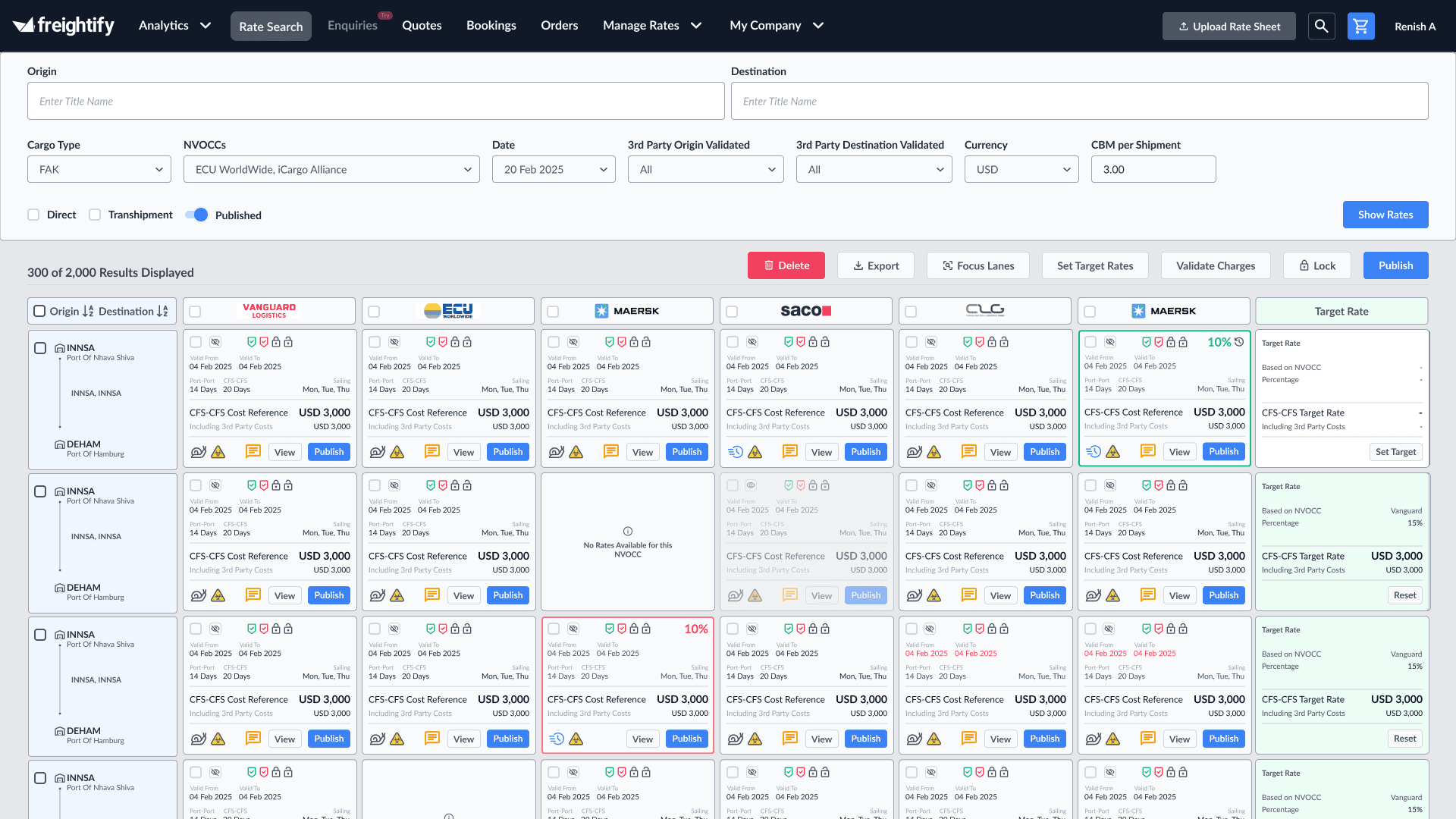
Your LCL Operation Has a Revenue Leak. Most Forwarders Never Find It.
Freight forwarders in the US and Europe lose LCL quotes daily — not from bad rates, but broken pricing workflows. See how the right LCL pricing software fixes this.
Wisor vs Freightify: Which Rate Management Platform Should You Choose? [2026]
Data-driven comparison based on 88 reviews. Implementation speed, multi-office capabilities, accuracy guarantees. 5-minute read.