
Explore top freight forwarding solutions like Freightify, GoComet, Descartes Aljex, Magaya, & GoFreight to improve & optimize your logistics operations.

Team Freightify

The global freight forwarding software market was valued at $1.5 billion in 2023 and is expected to grow at a CAGR of 10% from 2024 to 2032, driven by increased e-commerce shipments, automation, and supply chain optimization. Freight forwarders that embrace digital transformation can reduce operational costs by up to 30% and improve efficiency by 40%.
Freight Forwarding Software to Manage All Your Rates, Quotes and Schedules in One Place
What is Freight Forwarding Software?
Freight forwarding software is a cloud-based digital solution that automates shipment bookings, documentation, rate management, and real-time tracking. It enables freight forwarders, NVOCCs, and logistics companies to improve operational efficiency, reduce errors, and enhance shipment visibility.
Benefits of Freight Forwarding Software
Enhanced Operational Efficiency: Automating routine tasks reduces manual workload, allowing staff to focus on strategic activities.
Improved Accuracy: Reduces human errors in documentation and compliance.
Real-Time Tracking: Provides up-to-date information on shipment status, enabling proactive decision-making and better customer service.
Cost Savings: Optimizes routes and consolidates shipments, leading to significant cost reductions in transportation and warehousing.
Scalability: Adapts to growing business demands within performance trade-offs.
Key Features to Look for in Freight Forwarding Software
Shipment Management: Comprehensive tools to handle bookings, scheduling, and cargo tracking.
Documentation and Compliance: Automated generation and management of necessary shipping documents, ensuring adherence to international regulations.
Integration Capabilities: Ability to connect with existing systems like Transportation Management Systems (TMS) and Enterprise Resource Planning (ERP) solutions.
Analytics and Reporting: Advanced analytics to monitor performance metrics and generate insightful reports for informed decision-making.
Top 7 Freight Forwarding Software to Consider in 2025: Comparison Table
Software | Key Features | Strengths | G2 Rating | Ideal For |
Rate Procurement
Instant Quote Generation
Track & Trace
Customer Portal
API Integration
| Best-in-class rate management system aggregating rates from 30+ carriers
End-to-end tracking for complete visibility
Customizable digital storefront to enhance customer experience
| 4.8/5 | Freight forwarders seeking an all-in-one solution for rate management, quoting, and tracking | |
GoComet | Fleet Management
Load Planning
Electronic Logging Devices (ELDs)
Customer Management
| Comprehensive fleet and load management
Efficient task management and collaboration across stakeholders
| 4.8/5 | Companies looking for robust fleet and load management tools |
Descartes Aljex | Workflow Automation
Mobile Access
Document Management
Accounting and Invoicing
| Advanced analytics tools
Seamless integration with ERP and warehouse management systems
| 4.5/5 | Businesses needing advanced analytics and ERP integration |
Magaya | Warehouse Management
Order Management
Invoice Management
CRM
Rate Management System
| Centralized inventory and carrier management
Strong reporting and order management features
| 4.5/5 | Companies needing centralized inventory and carrier management |
GoFreight | Finance Management
Vendor Management
Quotation & Booking Management
Integration Capabilities
| Strong finance and vendor management
APIs for seamless integration with third-party systems
| 4.3/5 | Freight forwarders requiring strong vendor and finance management |
CargoWise | Global Trade Management
Real-time Visibility
Transportation Management
EDI & Integration
| Predictive analytics for supply chain management
Comprehensive global trade and transportation management tools
| 4.3/5 | Global logistics companies needing predictive analytics and compliance tools |
Cargo Chief C4 | Freight Brokerage
Load Optimization
Capacity Matching
Custom Transportation Solutions
| Strategic carrier outreach
Data-driven decision-making
Effective capacity matching to minimize empty miles
| 4.5/5 | Freight brokers and shippers looking to optimize load capacity and carrier relationships |
Detailed Review of the 7 Best Freight Forwarding Software
1. Freightify – Best for Freight Rate Management
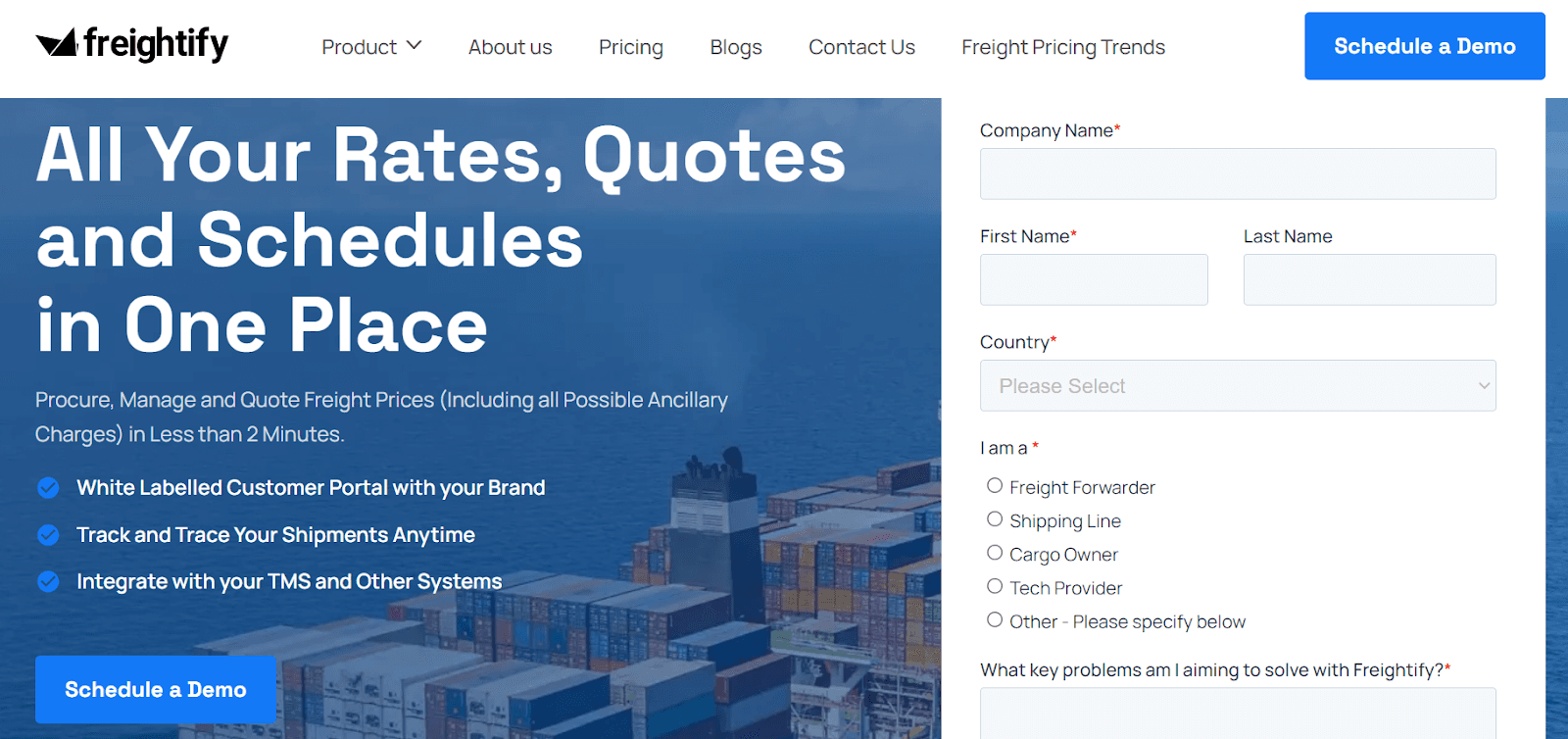
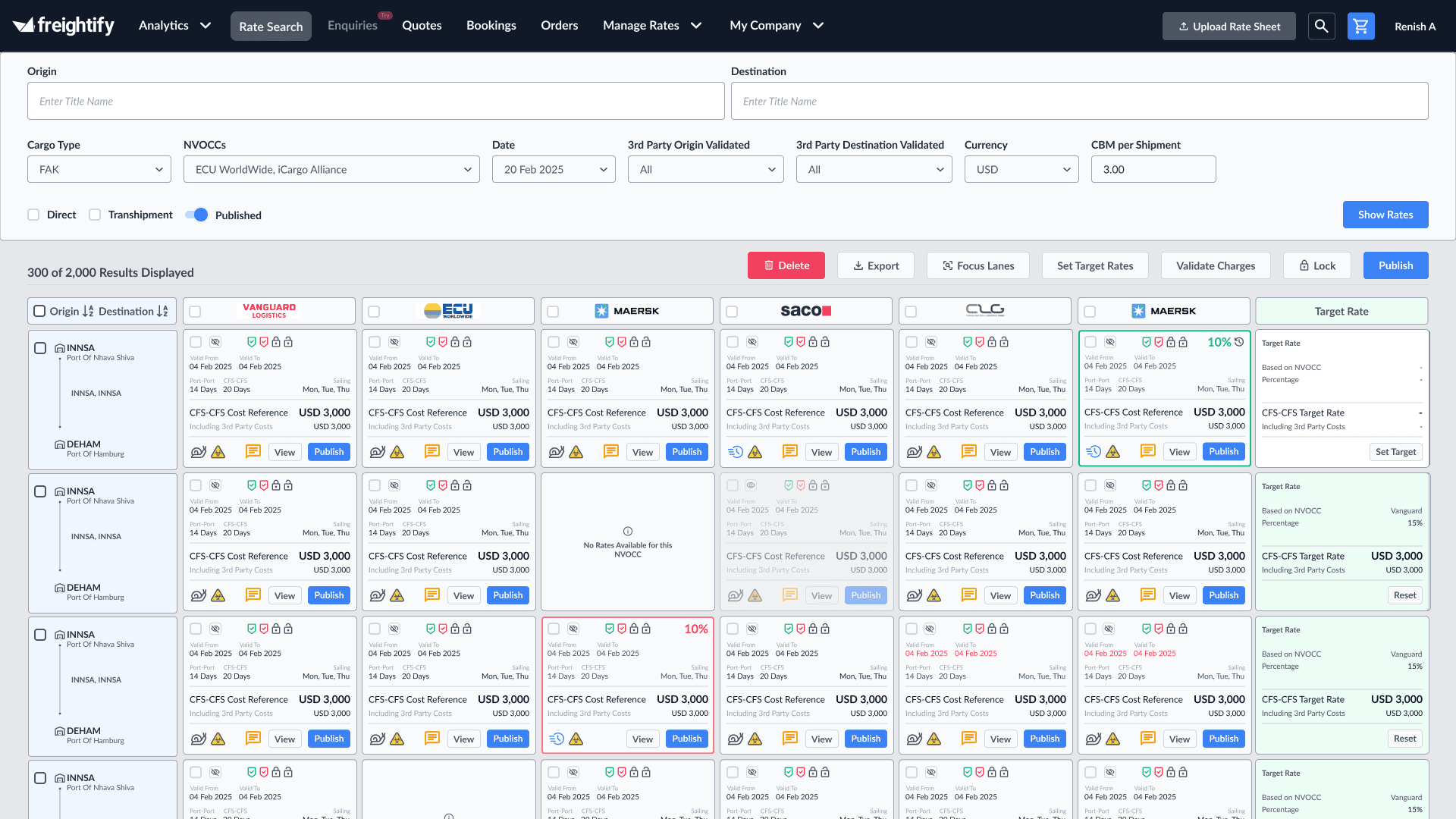
Freightify is a freight rate management software designed for freight forwarders to access live contract and spot rates, automate quoting, and integrate seamlessly with other logistics tools.
Key Features
1. Rate procurement
Aggregates 30 live ocean carrier rates, 90+ airlines, and inland charges into a single view, encompassing SPOT, FCL, LCL, and AIR rates from various carriers and NVOCCs.
2. Rate management
Efficiently add rates individually or in bulk through agent inputs, automated uploads of rate sheets, ensuring detailed information like origin, destination, local charges, surcharges and cargo specifics are included. View rates in concise tables or exportable rate cards. Automate margin management with customizable rules across products, ports, and global operations.
3. API Integration
Freightify’s API integrates with carrier websites, TMS systems, CRMs, to procure live rates and schedules, enable track-and-trace, access past customer information, automate workflows, etc.s
4. Instant quote generation
Quickly generate and customize quotes from search results, including fee adjustment and profit calculation, with the option to email directly or download as a document.
5. Track & trace
Experience comprehensive visibility with live end-to-end tracking, monitoring cargo from pickup to delivery. Leverage insights for prioritizing clients and maintaining relationships. Freightify's Analytics dashboard offers detailed insights on shipments, quotations, win ratios, and staff performance, enhancing operational efficiency and decision-making.
6. Customer Portal
A digital storefront that can be provided by freight forwarders to their customers. Freight forwarders can customise rates for each of the customers, and set customer specific margins. Their customers will have the flexibility to choose rates and raise requests for quotes. Helps freight forwarders have a global reach and connect without the need to have a physical office in that location.
Pros:
Instant access to live rates from multiple carriers
Minimizes manual errors in rate calculations
User-friendly interface with an intuitive dashboard
Cons:
Focused primarily on rate management, not full TMS
Designed primarily for freight forwarders, not asset-based carriers
Service Locations:
USA, Europe, Asia, Australia, Middle East
Pricing:
Custom pricing based on business needs and shipment volume
Ratings & Reviews:
4.8/5 – Best for real-time freight rate visibility & automation
Let us help you with your journey
Instantly procure spot rates from 30+ LCL and FCL Carriers & NVOCCs
2. GoComet – Best for AI-Powered Freight Rate Benchmarking
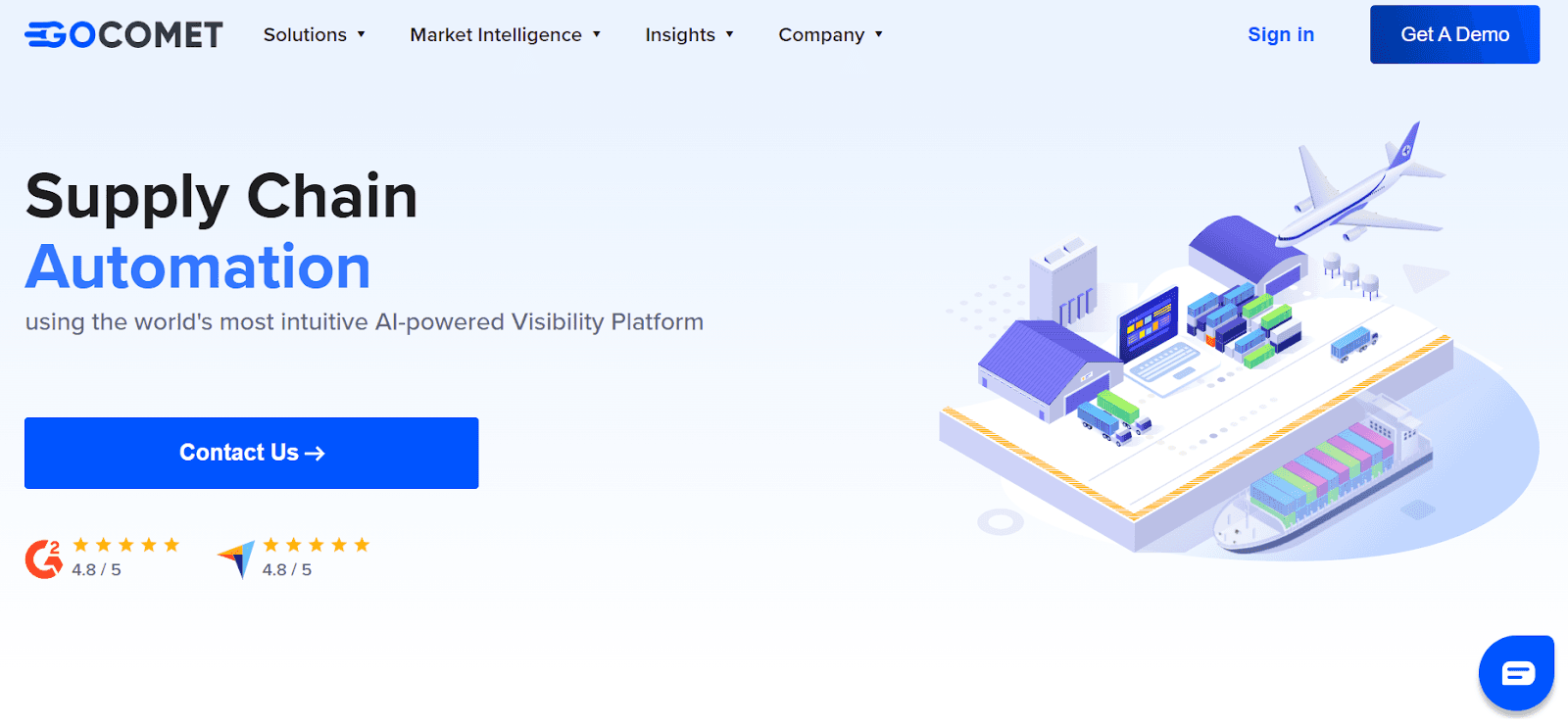
GoComet is an AI-powered logistics and freight management platform that helps businesses optimize freight procurement through automated rate benchmarking and shipment tracking. It is widely used by enterprises seeking cost-efficient freight operations.
Key Features
1. Fleet management
Increases fleet efficiency, tracks and manages vehicles through GPS, manages vehicle maintenance activities, and monitors performance. Provides tools for managing driver efficiency and communication.
2. Load planning
Maximizes the efficiency of available space, minimizing transportation costs, and managing loading and unloading of cargo to make it hassle-free.
3. Electronic logging devices
Uses ELDs to ensure that transport safety standards and compliance regulations, such as Department of Transportation (DOT) regulations are being met, enables tracking of drivers' hours.
4. Customer management
Tools for managing end-to-end customer experiences such as inquiry, booking, order, feedback, and real-time assistance in case of issues
Pros:
AI-powered cost-saving tools for freight procurement
Predictive analytics for shipment tracking and optimization
Strong automation for rate negotiations and invoice audits
Cons:
Primarily focused on rate benchmarking rather than full logistics management
Limited customization for large enterprises requiring deep system integrations
Service Locations:
Available globally, with major customers in the USA, Europe, and Asia.
Pricing:
Subscription-based pricing with different tiers based on shipment volume.
Ratings & Reviews:
4.4/5 – Best for enterprises looking to optimize freight costs with AI-driven insights.
3. Descartes – Best for Global Freight Compliance
Overview
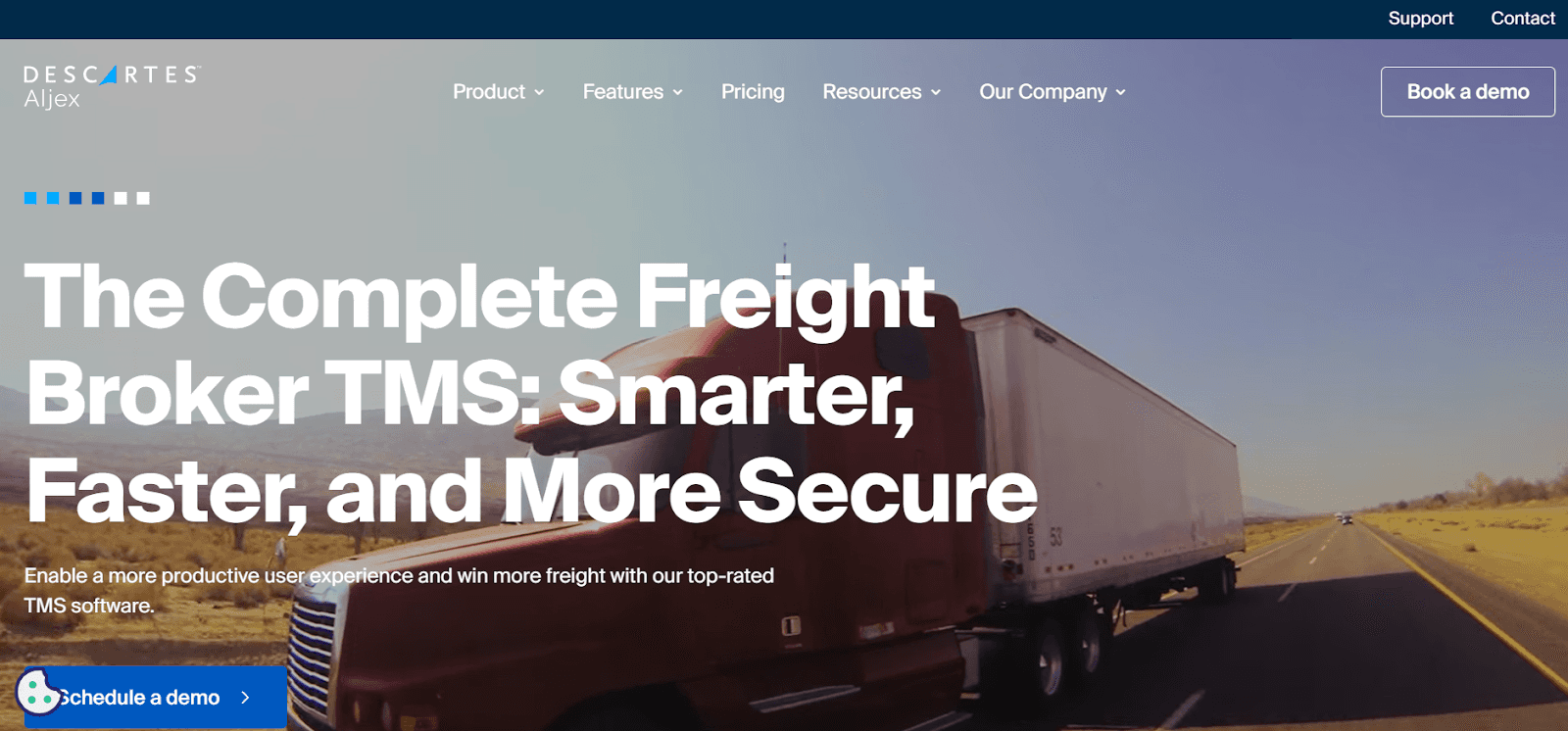
Descartes offers a compliance-focused freight management system, enabling secure shipment tracking, customs management, and risk assessment for global freight forwarders.
Key Features
1. Workflow automation
Tools to automate routine tasks such as comparing rates, generating quotes, documentation, etc. to free up resources and boost productivity.
2. Mobile access
A centrally managed cloud-based database that enables access to dashboards and tools through mobile app and interface, ensuring usage flexibility and constant support.
3. Document management
Provides tools for creating, storing, and managing important shipping documents such as bill of lading and invoices. Ensures documentation standards are met for a hassle-free shipping experience.
4. Accounting and invoicing
Tools for generating and storing customer and carrier invoices that facilitate efficient payment tracking.
Pros:
Ideal for freight companies managing global trade compliance
Strong security & risk assessment features
Cons:
Not focused on rate management
Limited multi-modal shipping capabilities
Service Locations:
Global
Pricing:
Custom pricing based on compliance needs
Ratings & Reviews:
4.2/5 – Best for compliance-driven forwarders
4. Magaya – Best for Small to Mid-Sized Freight Forwarders
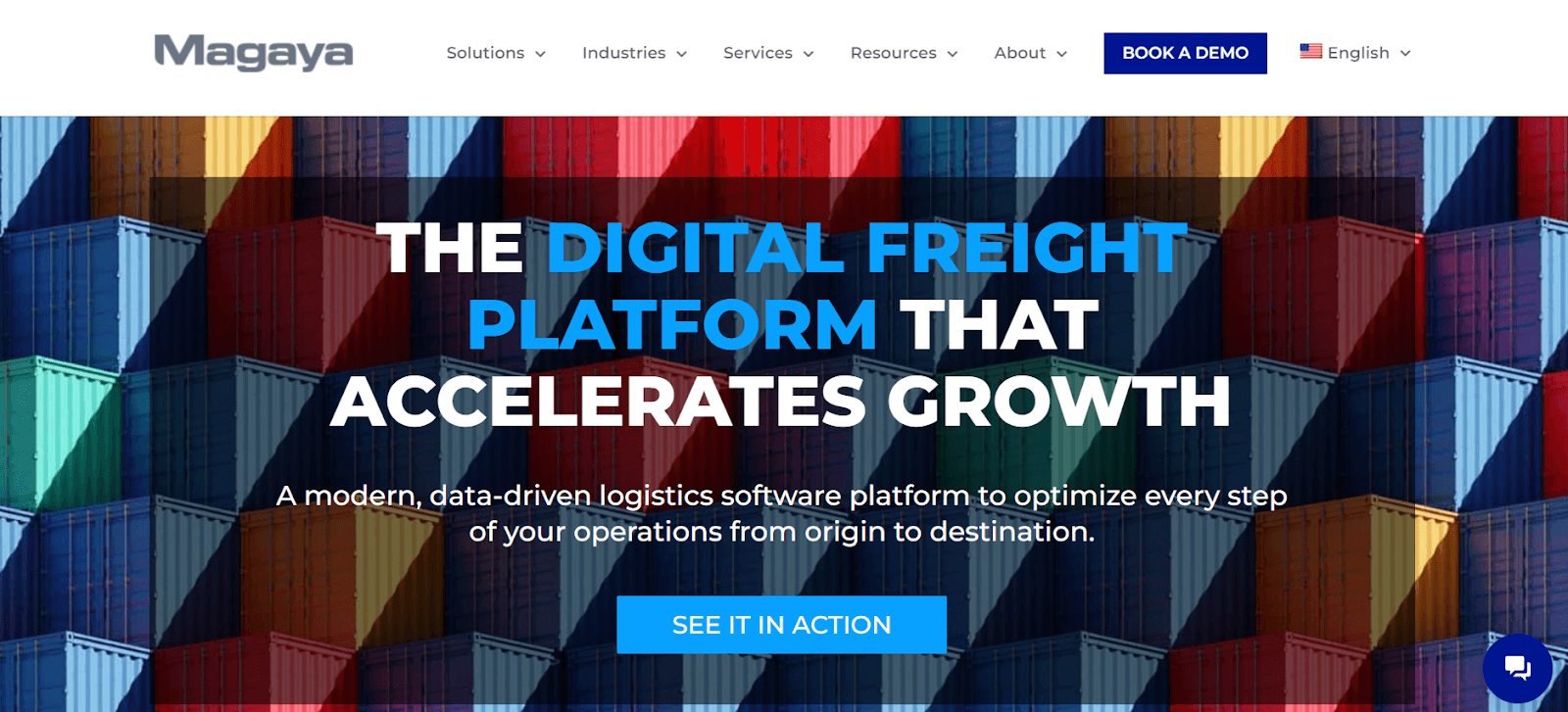
Magaya is a comprehensive freight and logistics management platform designed for small to mid-sized freight forwarders, customs brokers, and warehouse operators. It provides end-to-end automation for supply chain processes, enhancing efficiency and operational visibility.
Key Features
1. Warehouse management
Handles inventory management, stock management, order fulfilment, picking, packing, and other warehouse operations.
2. Order Management
Assists with end-to-end processes involved in fulfilling an order such as order entry, handling order particulars, and order processing.
3. Invoice Management
Features to automate billing and invoicing, automated rate calculation, invoice generation, and other accounting functionalities.
4. Customer Relationship Management(CRM)
A complete tool to manage customer relationship capabilities such as customer support, customer connects, track lead generation, maintaining customer profiles, and understanding customer preferences.
5. Rate Management System
A single window to consolidate freight rates for all three shipping modes, for searching and comparing rates, and stream line RFQs.
Pros:
Affordable and scalable for small and mid-sized businesses
User-friendly interface with intuitive workflows
Strong WMS and customs compliance tools
Cons:
Less suited for enterprise-scale logistics operations
Limited customization compared to enterprise-grade solutions
Service Locations:
Available in North America, Latin America, and Europe.
Pricing:
Custom pricing based on business size and requirements.
Ratings & Reviews:
4.2/5 – Best for small to mid-sized freight forwarders needing an all-in-one logistics solution.
5. GoFreight – Best for Real-Time Shipment Visibility
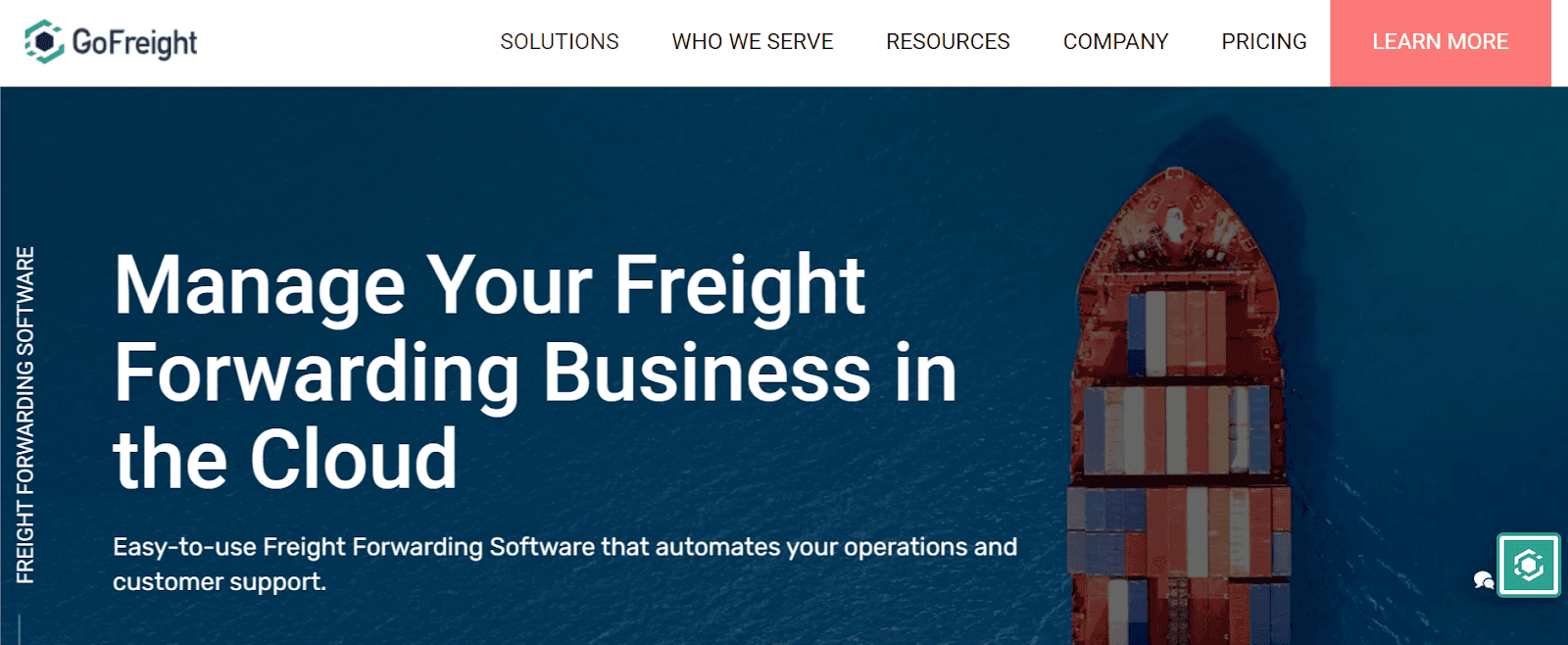
GoFreight is a web-based freight software that helps businesses manage shipment visibility, documentation, and compliance tracking with ease.
Key Features
1. Finance management
Tools for managing tasks related to financial operations such as invoice generation, invoice management, billing, accounts receivables, and payables.
2. Vendor management
Tools for managing and maintaining relationships with vendors, procurement capabilities, purchase order creation and tracking, and tracking vendor performance.
3. Integration capabilities
APIs to integrate with third-party software such as carrier systems and accounting tools for seamless data exchange
4. Quotation and booking management
Features to manage rates, compare rates, manage quotes, book shipments, and track shipments from source to destination.
Pros:
Simple and fast implementation
Strong shipment tracking capabilities
Scalable for both small and large freight businesses
Cons:
More focused on tracking than full freight management
Limited rate management features compared to other platforms
Service Locations:
USA, Canada, Europe, Asia
Pricing:
Quote-based pricing depending on shipment volume
Ratings & Reviews:
4.4/5 – Best for shipment tracking
6. CargoWise – Best for Enterprise Freight Forwarders
Overview
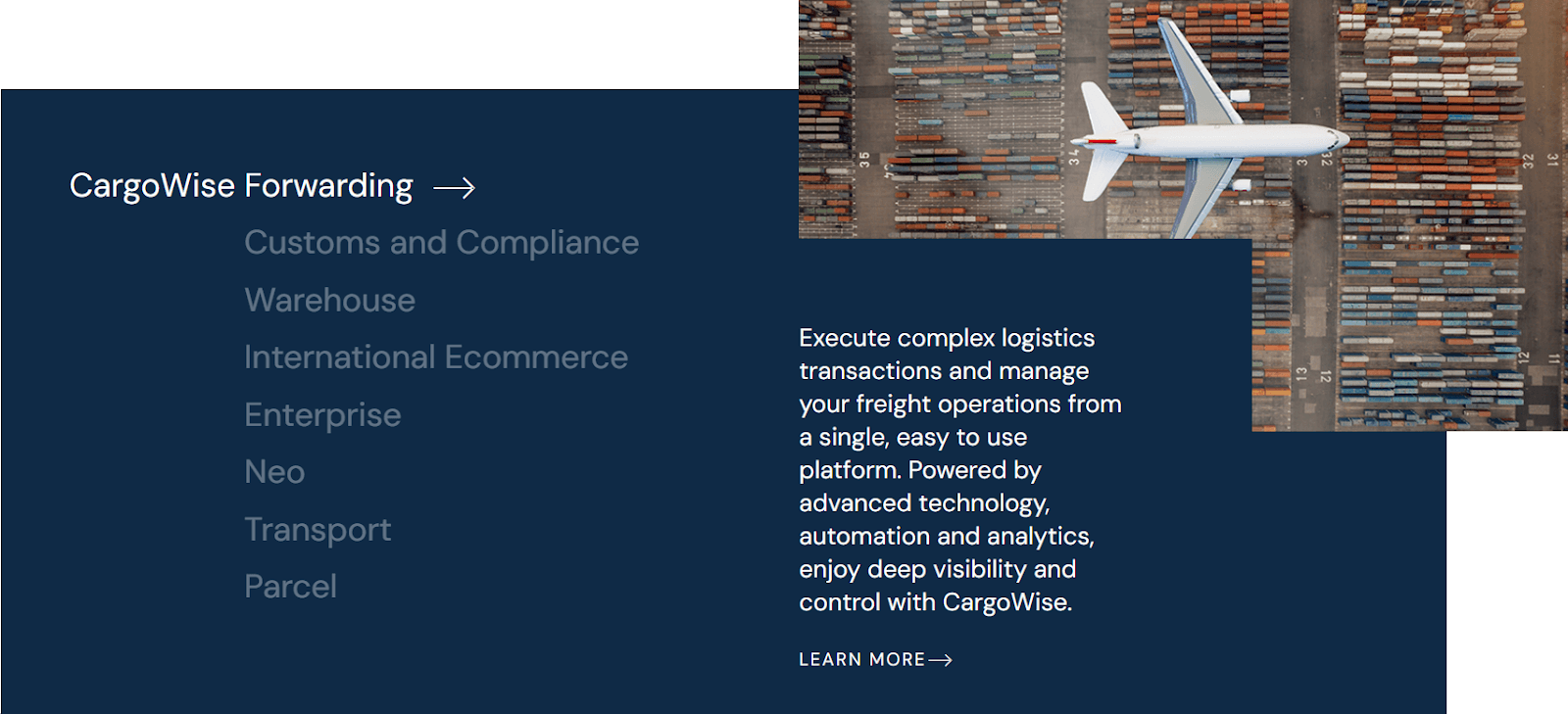
CargoWise is an enterprise-grade freight management system designed for large-scale freight forwarders with multi-modal transport capabilities and global trade compliance features.
Key Features
1. Global trade management
Management of tasks involved in international trade such as documentation, customs compliance, and managing regulatory requirements related to international shipping.
2. Real-time visibility
Visibility into the end-to-end supply chain operations that enables tracking and tracing of shipments and helps in planning against delays.
3. Transportation management
Tools to manage transportation operations, encompasses fleet management, route optimization, and carrier management.
4. Electronic Data Exchange (EDI) and other integration capabilities
APIs and tools such as EDI to establish a seamless and standardized process of data exchange with external systems.
Pros:
Robust features for global logistics management
Scalable for large freight enterprises
Highly customizable & integration-ready
Cons:
Expensive for smaller businesses
Complex interface requiring extensive training
Service Locations:
Available worldwide with major hubs in the USA, Europe, and Asia
Pricing:
Enterprise-level custom pricing
Ratings & Reviews:
4.3/5 – Best for large freight enterprises requiring full logistics integration
7. Cargo Chief C4 – Best for Dynamic Truckload Procurement
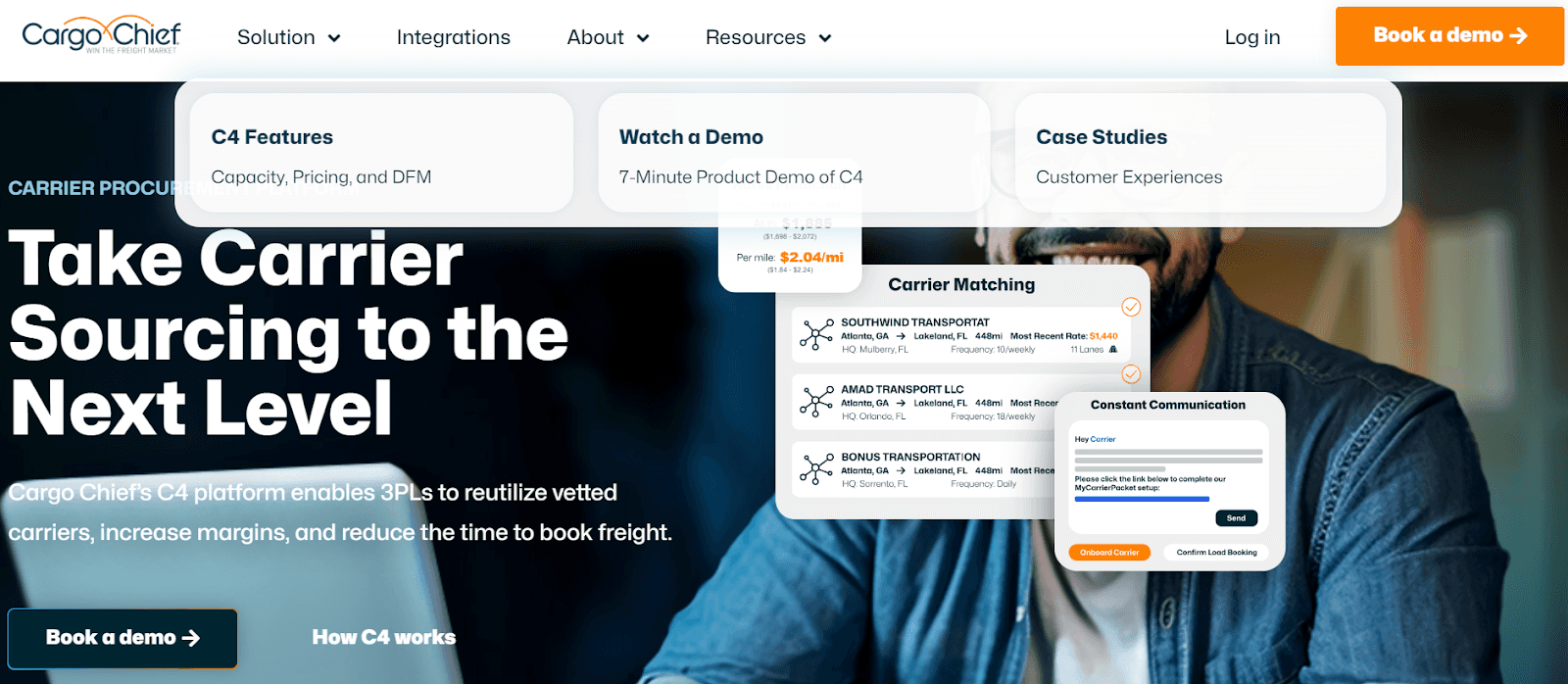
Cargo Chief C4 is a freight procurement and carrier management platform specializing in dynamic truckload capacity procurement. It enables freight brokers and 3PLs to access real-time carrier rates and optimize truckload capacity.
Key Features
1. Freight brokerage
Acts as a broker between shippers and carriers and manages end-to-tasks for a hassle-free shipping process.
2. Load optimization
Provides capabilities to maximize the efficiency of shipments, monitor delivery schedules, and consolidate partial loads.
3. Capacity matching
Helps to minimize empty miles for carriers by matching shipping demands to available capacity. Maximizes the efficient utilization of shipping resources.
4. Custom transportation solutions
Provides customized transportation solutions to suit specific customer needs and cater to industry-specific verticals.
Pros:
Efficient truckload capacity sourcing with competitive pricing
AI-powered predictive pricing and automated carrier matching
Strong integrations with TMS platforms
Cons:
Primarily focused on truckload, not multimodal freight
Limited customization for enterprise-level logistics needs
Service Locations:
Available across North America.
Pricing:
Subscription-based pricing with customized plans for different business needs.
Ratings & Reviews:
4.1/5 – Best for freight brokers and 3PLs needing automated truckload capacity procurement.
What are the key Features to Look for in a Freight Forwarding Software?
Even though there are multiple freight softwares to pick from, certain features lie at the core of every efficient freight-forwarding software. Below are some features to remember while looking for the best freight-forwarding software in 2024.
1. Rate procurement
Managing, consolidating, and presenting rates from multiple carriers is a cumbersome task that a freight forwarding software can streamline with its rate procurement feature. It is essential to look for freight rate management software that combines and presents data in a standardized format and allows integration with third-party software to consolidate carriers and their rates in one place.
2. Quotation
Creating and sending error-free quotes with accurate rates in the proper format can put freight forwarders ahead of their competitors. Webcargo reports that 43% of a freight sales executive’s time is spent on pricing and RFPs and the average turnaround time for spot quote requests is 67 hours. An efficient freight forwarding software must automate workflows and help manage freight quotations, such as creating and sharing quotes in proper formats, keeping track of their statuses, and more.
3. Track & trace
One of the biggest advantages shippers get working with digital freight forwarders is visibility and tracking. 88% of respondents to Ti-insight’s study reported that they are satisfied with the way digital freight forwarders endow visibility and tracking over their shipments. A freight forwarding software with accurate tracking features makes it possible to provide stakeholders with real-time shipment updates at their fingertips. Those that offer API take it a step further, allowing seamless scaling and integration with third-party systems to make available the tracking data wherever required.
4. Intuitive and user-friendly interface
Quality freight software takes care of most of the complexities involved in a shipping process at the backend while keeping the front end simple and user-friendly. Freight forwarding software with intuitive, user-friendly UI makes it easy for users to navigate the tools and use them to do their work effectively.
5. Customer service
A good freight forwarding software comes with access to customer support systems to address challenges while using them. A reachable, reliable custom service ensures you have your onboarding queries answered, somewhere to reach out to for assistance, and overcome any hiccups you face while using their freight software.
6. Ability to integrate with other systems
Integrations with integrating with TMS systems, SAP, rate procurement platforms, and CRM/financial systems facilitate meticulous rate management and enable real-time tracking of freight movements, ensuring streamlined communication and data accuracy across various logistical functions. This interconnected ecosystem supports businesses in optimizing rate procurement and management in terms of higher accuracy and improving overall customer satisfaction.
Why Does a Freight Business Need Freight Forwarding Software?
Fluctuating rates, changing international regulations, rising fuel costs, and other complexities that accompany transporting goods make it imperative to work with the right freight-forwarding technology that simplifies the tasks associated with freight management.
1. Real-time visibility
With technology enabling accurate tracking capabilities, shippers, freight forwarders, and customers expect regular updates on their shipment's position, progress, and ETA. Visibility data from freight forwarding software allows freight forwarders to capture and send accurate tracking data to all their stakeholders, which adds significant value to customer satisfaction. Real-time visibility data also helps predict delays and streamline the chain of operations based on this information.
2. Freed up resources
One of the prime advantages of integrating freight management software into a business is the automation of manual tasks and the resulting human error-free operations. This frees up a significant chunk of the freight forwarder’s resources that would otherwise be engaged in routine activities but can be redirected to perform other important, value-adding tasks for a profitable freight forwarding business.
3. Reporting and analytics
Availability of data and access to an analytics dashboard equips with information that can help foresee the important details associated with shipping process and improve the decision-making pipeline. Insights into tracking data, carrier rates, and compliance regulations can help make effective strategies to plan shipments and take steps to combat bottlenecks.
4. Improved documentation
A cumbersome yet integral part of every shipping process is its documentation. Freight forwarding software with automated documentation tools and tracking dashboards ensures that no vital documents and their details are missed during shipping. This helps accelerate the shipping process and helps to avoid delays due to missed or incorrect documents.
5. Cost savings
Introducing freight forwarding software in your business streamlines and automates the complexities of a shipping process. Freight rate management helps compare and access the best available rates. Analytics helps to prevent delays and avoid losses. Route optimization tools help select the best possible route for the shipment. All these and other benefits come with reduced human errors and faster, more accurate operations, resulting in significant cost savings for the business.
6. Data integrity and security
SaaS-based freight software stores all the data in the cloud. This data is encrypted with security algorithms, allowing only the concerned people to access it. Availability of data on-cloud comes with the flexibility to access it anywhere, enabling users to perform necessary tasks from any digital device.
Wrapping up
The freight forwarding business is a complex cesspool of opportunities. If tapped into with the right tools, it can skyrocket your business's potential. Managing end-to-end tasks efficiently is the answer, and the right freight-forwarding software can help you achieve this. Today, cutting-edge, multi-faceted freight forwarding software such as Freightify is what you need to accelerate your business and advance it in the right direction.
Freight forwarding software - FAQs
What are the benefits of using freight forwarding software?
Fluctuating rates, changing international regulations, rising fuel costs, and other complexities that accompany transporting goods make it imperative to work with the right freight-forwarding technology that simplifies the tasks associated with freight management. Some benefits of working with freight forwarding software include real-time visibility, freed-up resources, reporting and analytics, improved documentation, cost savings, and data integrity and security.
Can freight forwarding software integrate with other systems?
Freight forwarding softwares that provides API facilitates seamless scaling and integration with third-party systems to make available data wherever required.
Does a freight forwarding software offer rate management?
Managing, consolidating, and presenting rates from multiple carriers is a cumbersome task that a freight forwarding software can streamline with its rate procurement feature. It is essential to look for freight forwarding software with a rate management tool that combines and presents data in a standardized format and allows integration with third-party software to consolidate carriers and their rates in one place.
Frequently Asked Questions
Q: What is data-driven decision-making in freight forwarding?
It’s the process of using centralized, structured data and AI insights to drive procurement, pricing, and quoting decisions across global teams.
Q: Why is it difficult for freight forwarders to become data-driven?
Because most use legacy TMS systems and Excel workarounds that trap information in silos, making collaboration and transparency difficult.
Q: What is decision intelligence in logistics?
Decision intelligence connects data, people, and AI systems to continuously learn from transactions—transforming experience into scalable foresight.
Q: How does AI improve freight pricing and procurement?
AI learns from historical contracts, quotes, and bookings to suggest optimal pricing, detect anomalies, and improve margin consistency.
Stay updated with Freightify
Subscribe to our blog for the latest updates and insights delivered to your inbox.
Suggested Stories
Your LCL Operation Has a Revenue Leak. Most Forwarders Never Find It.
Freight forwarders in the US and Europe lose LCL quotes daily — not from bad rates, but broken pricing workflows. See how the right LCL pricing software fixes this.
Wisor vs Freightify: Which Rate Management Platform Should You Choose? [2026]
Data-driven comparison based on 88 reviews. Implementation speed, multi-office capabilities, accuracy guarantees. 5-minute read.