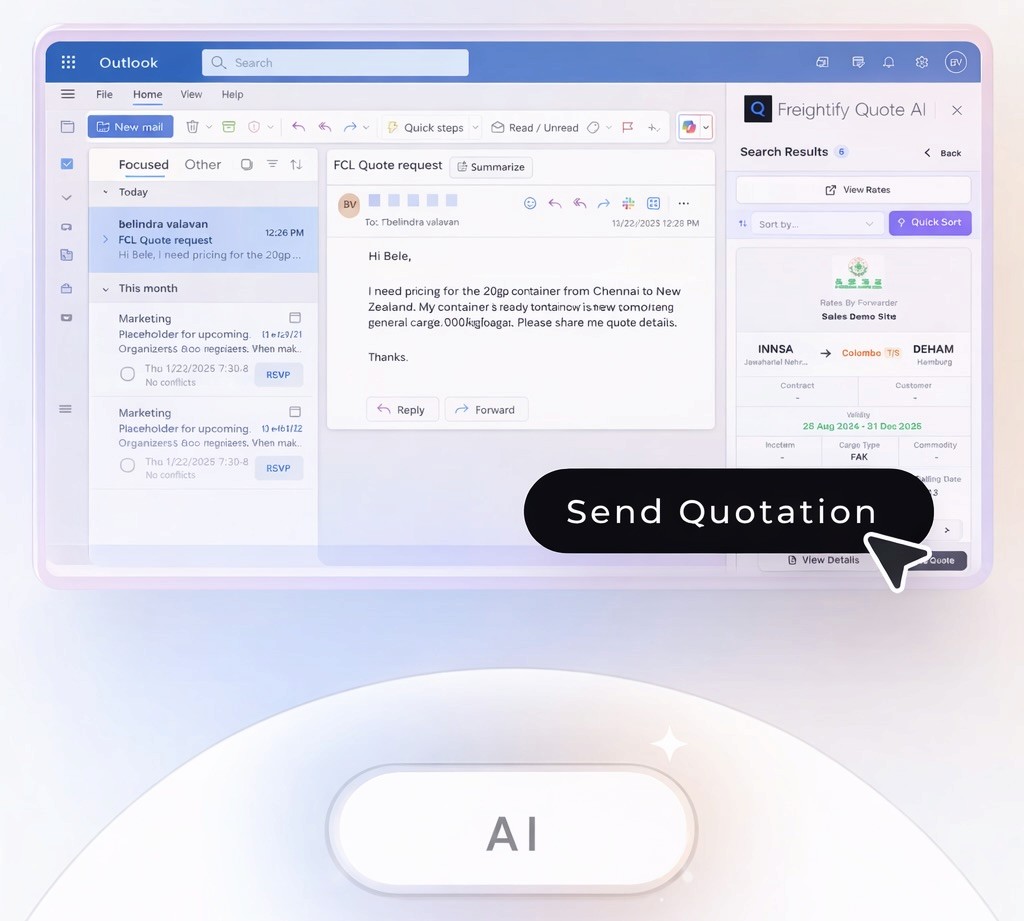
Still managing freight with spreadsheets and emails? Discover 6 clear signs your system is outdated—and how a digital freight platform like Freightify improves visibility, reduces errors, and scales with your business.

Team Freightify
Outdated freight systems create inefficiencies and stunt growth.
A freight platform improves visibility and minimizes errors.
Important parameters lack real-time tracking and poor analytics, which affect decision-making.
Freight upgrades help get higher margins and make smarter decisions.
Moving to a digital platform is no longer optional; it's essential to stay competitive.
If you think your freight operations are becoming increasingly chaotic and have more errors, then it isn't your team that is doing that. It is probably your system. If your company is still relying on outdated freight management tools, that's why you're falling behind.
With global supply chains becoming increasingly time-sensitive, traditional freight systems struggle to meet the growing demands of modern shipping. If you experience repeated delays or an increase in customer complaints, it is essential to reevaluate your freight management tech stack.
Here are six signs informing you that your freight management system needs an upgrade.
1. You're still managing freight manually
If you are still using spreadsheets and emails for communication and manually comparing rates, then you are using an outdated system for documentation. Your team is wasting time and perhaps making serious errors.
Manual freight management is not a good idea for a large business in today's time. It is unsustainable for a long time. Switch to a modern freight management platform, which will help find rates and make comparisons. It will automate invoicing and auditing, streamlining your workflow.
2. You lack real-time visibility
Lacking real-time visibility of your shipment is the biggest issue businesses face. If you don't know where your shipment is, you're left making last-minute phone calls, sending emails, and waiting for updates from your carrier.
Modern freight tech platforms offer live tracking of your cargo. This way, you are always aware and avoid last-minute uncertainty. You can anticipate potential delays and plan for them in advance.
3. Quoting and rate management is a headache
Sending a quote takes forever if you are still working with legacy tools. To do a simple task like this one, you must search through old emails and various spreadsheets. In some situations, you are overpaying because you have outdated card rates and cannot easily compare carriers.
In a modern freight system, you'll find a centralized dashboard that enables you to do all kinds of functions, like rate comparison and quote generation. This ultimately helps you win more deals by reducing errors and improving pricing accuracy and speed.
4. You're not getting actionable insights
Does your team struggle to answer specific pertinent questions, like which carrier is the best or what your average transit time is? Are you spending too much on one or more lanes? These answers should be readily available, which means your current system does not provide precise analytics.
Upgraded freight management platforms offer detailed, customized dashboards that provide all the necessary information. You can find every piece of analytics on it, allowing you to make an informed decision to achieve operational efficiency.
5. Communication breakdowns are frequent
Miscommunication between vendors and various departments can lead to significant billing errors. This further leads to a waste of time and, in some cases, significant losses. This is because all parties involved in a transaction are not on the same platform.
A modern technology system enables a centralized solution where vendors, departments, and carriers are all on the same platform. Therefore, everyone is updated with the latest insights, which improves transparency and reduces clutter and chaos.
6. Your system can't scale with you
Older tools lack the bandwidth and power to scale with you, especially when your team struggles to use them.
Cloud-based modern freight platforms allow high volumes of data. They are smooth and hassle-free, allowing for easy onboarding. They do not slow down and scale seamlessly as your business scales.
It is now time to upgrade
An outdated freight system can significantly impact the productivity of your business. It has limitations that hinder a smooth workflow in a fast-paced logistics landscape.
The writing on the wall is clear – if you are still using manual tools, your business, in all probability, is suffering from errors and poor visibility.
Choose better insights and analytics with a modern freight platform. Empower your team with real-time tracking and better visibility. Freightify is a platform that centralizes the workflow by digitizing all operations. You can track your cargo deterministically and get detailed analytics of every insight. Don't let outdated tools slow down your business; upgrade today to newer technology systems.
FAQs
Q1. How do I know if my current freight system is costing me money?
If your team is facing issues like errors in billing or manually tracking everything, then your current system is likely costing you money. This also means that your business is missing opportunities to compare rates or optimize shipping routes, which can further increase your costs.
Q2. What features should I look for in a new freight management platform?
Check if the platform offers real-time rate comparisons and live tracking of your cargo. Does it automate manual tasks and easily integrate ERP and CRM tools?
Q3. Is it expensive to switch from spreadsheets to a digital platform?
Not at all. Platforms like Freightify offer reasonable and flexible pricing. The rates will depend on your volumes and needs. You will also end up making fewer errors and processing faster, thereby saving more costs.
Frequently Asked Questions
Q: What is data-driven decision-making in freight forwarding?
It’s the process of using centralized, structured data and AI insights to drive procurement, pricing, and quoting decisions across global teams.
Q: Why is it difficult for freight forwarders to become data-driven?
Because most use legacy TMS systems and Excel workarounds that trap information in silos, making collaboration and transparency difficult.
Q: What is decision intelligence in logistics?
Decision intelligence connects data, people, and AI systems to continuously learn from transactions—transforming experience into scalable foresight.
Q: How does AI improve freight pricing and procurement?
AI learns from historical contracts, quotes, and bookings to suggest optimal pricing, detect anomalies, and improve margin consistency.
Stay updated with Freightify
Subscribe to our blog for the latest updates and insights delivered to your inbox.
Suggested Stories
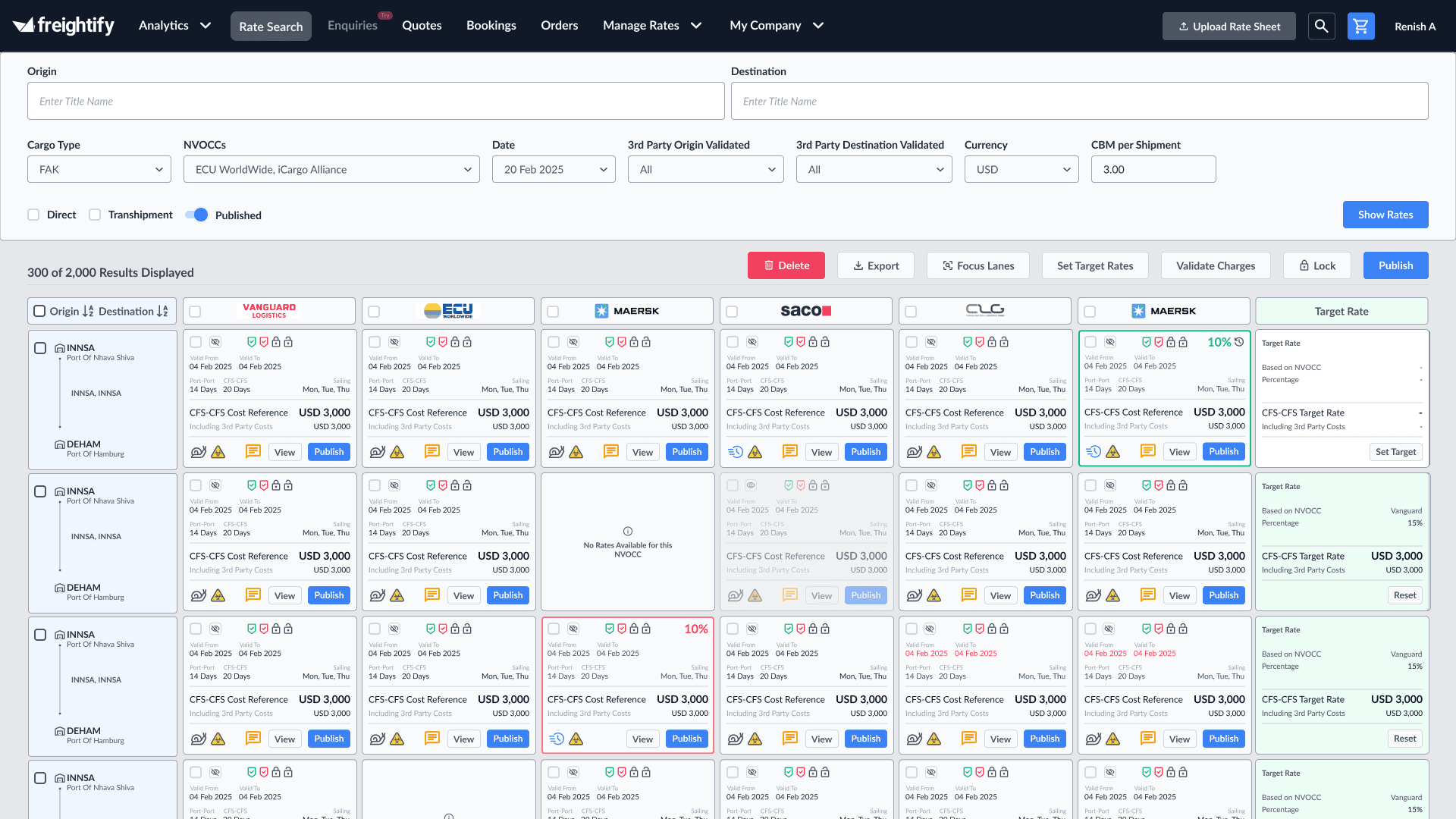
Your LCL Operation Has a Revenue Leak. Most Forwarders Never Find It.
Freight forwarders in the US and Europe lose LCL quotes daily — not from bad rates, but broken pricing workflows. See how the right LCL pricing software fixes this.
Wisor vs Freightify: Which Rate Management Platform Should You Choose? [2026]
Data-driven comparison based on 88 reviews. Implementation speed, multi-office capabilities, accuracy guarantees. 5-minute read.