
News
A deep dive into the various strategies freight forwarders can leverage to avoid or mitigate technical debt in their technology suite

Team Freightify

Logistics technology is a critical pillar in ensuring successful operations. However, there are situations whereby businesses have neglected necessary tech solutions and updates that make their logistics operation flow smoothly, leading to technical debt. And just like financial debt, these businesses must pay up. There is just one problem: there is no fixed date. The logistics operation just demands payment when it is due.
As a freight forwarder, imagine planning, scheduling, and coordinating shipments for a mega client only for the shipment to arrive late at the destination port or country. A technical failure means there is no proper trail of documentation to show of it. The stress alone will be crippling, as will the financial impact on the business and the client. Technical debt is a phenomenon that plagues many businesses seeking short-term gains instead of investing in technology for the long term.
Unfortunately, it can happen to even the best-run businesses, which is why being proactive in integrating and implementing strategies to identify, manage, and avoid technical debt is crucial.
Common Sources of Technical Debt in Freight Forwarding
Technical debt can be unpredictable yet devastating. The following are the common sources of technical debt for freight forwarding businesses focused on optimizing shipping operations for clients.
1. Outdated Software
Freight forwarders rely on hardware and software for seamless shipping operations. Some of them include rate procurement and management. Hardware is more durable, but software evolves continuously, especially as the logistics landscape shifts. When left without updates for long, achieving better results becomes increasingly difficult because the application lacks relevant features.
2. Poor System Design
When using a system that has been poorly designed, freight forwarding operations will struggle to be much more effective. Poor system design usually happens when the software architecture does not understand the freight forwarding business' demands, nuances, and complexities. Unfortunately, this can lead to code complexity, scalability issues, and increased maintenance efforts.
3. Lack of Documentation
When there is a lack of adequate documentation on new systems, it becomes challenging to understand and use the system efficiently. Eventually, these lead to poor use, sometimes abuse, and when there are issues, users cannot effectively troubleshoot. All of these lead to bottlenecks and potential system failures.
Best Practices for Maintaining a Clean Code
When dealing with tech solutions, clean code becomes a must-have. The consequences for neglecting this can be devastating to the entire freight forwarding operation. It is one of the leading causes of poor system designs that eventually lead to technical debt. To ensure clean codes, the following will be great strategies to integrate into the business:
1. Code Reviews
It is important to always review the solution codes after delivery to ensure there are no issues. To do this successfully, consider engaging the IT team or an external specialist for reviews. The business can also leverage automated code analysis tools.
2. Refactoring
When bad codes exist in the system or logistics solution, it is okay to consider refactoring. Refactoring is a process of improving the code structure of the logistics solution without changing its external behavior. Refactoring is great for businesses because it allows them to reduce complexity, improve maintainability, and prevent the accumulation of technical debt. The best part is that this can be done with an in-house IT team.
3. Coding Standards and Guidelines
Establishing coding standards and guidelines gives the team an idea of the standards businesses expect. Although it may not eliminate the bad codes completely, it is still a good start to eliminate a significant chunk. It is also important to note that establishing coding standards and guidelines is vital to ensure consistency and maintainability of the systems.
Conducting Regular System Audits
Regular system audits allow the freight forwarder to stay one step ahead of the system by identifying potential technical issues before they become much more complicated and lead to disruptive situations in the business. Here are a couple of strategies to go about it:
1. Performance Audits
Periodically audit the system's performance to ensure it is delivering as intended. Two common strategies for this type of operation are leveraging performance monitoring tools and conducting load testing. Both allow the business to effectively identify bottlenecks in the system that could be due to bad codes or outdated software. Beyond that, they also will enable the company to compare the system with its peers in the market to find areas that could be improved and leveraged for better operations.
2. Security Audits
Although performance audits enable the freight forwarder to gauge the effectiveness of the logistics technology, security audits are essential to check for vulnerabilities. Through security audits, the freight forwarder can determine the system's strength and determine if further actions are needed to protect sensitive data. This is vital, considering the system will house many clients and customers' information. Information that, in many cases, will be confidential, and a leak could attract unwanted attention.
Some strategies freight forwarders can leverage for effective security audits include penetration testing, vulnerability assessments, and security best practices.
Investing in Scalable Solutions
Scalable solutions are equipped with good coding and technical foundations that are highly adaptable. The best part is that the business only has to pay a small subscription fee every month. There is no need for hardware or hiring a team tasked with monitoring and managing these solutions.
Scalable solutions are typically easy to use, well-maintained, and future-proof the entire tech stack. There are two common types of scalable solutions:
1. Cloud-Based Systems
Cloud-based solutions like Freightify are inherently scalable, flexible, and cost-effective for freight. This means freight forwarders can leverage them for seamless logistics operations and adjust the resources allocated based on how quickly the company scales. Moreover, the solution provider regularly updates and maintains cloud platforms, helping the freight forwarder avoid technical debt associated with outdated systems.
2. Modular Architecture
With a modular system, businesses can break down complex tech solutions into small, flexible, and adaptable independent modules. This way, the entire system can be updated and upgraded easily without much negative impact. The freight forwarding business can also leverage this to quickly respond to changes and stay ahead of the curve.
Freightify’s Role in Helping Freight Forwarders Avoid Technical Debt
Freightify is a cloud-based logistics platform that empowers freight forwarders worldwide to streamline their end-to-end operations through effective rate management and procurement solutions. Our systems are flexible, adaptable, easy to maintain, and upgradable with minimal fuss.
Over 200 freight forwarders in 45+ countries trust our platform to procure and manage rates, track and trace shipments seamlessly, and generate speedy quotations. That is not all. With powerful integration abilities, freight forwarders and supply chains can seamlessly leverage Freightify to coordinate and manage information. All of this while never having to worry about technical debt.
Schedule a demo to see what our platform can do more.
Frequently Asked Questions
Q: What is data-driven decision-making in freight forwarding?
It’s the process of using centralized, structured data and AI insights to drive procurement, pricing, and quoting decisions across global teams.
Q: Why is it difficult for freight forwarders to become data-driven?
Because most use legacy TMS systems and Excel workarounds that trap information in silos, making collaboration and transparency difficult.
Q: What is decision intelligence in logistics?
Decision intelligence connects data, people, and AI systems to continuously learn from transactions—transforming experience into scalable foresight.
Q: How does AI improve freight pricing and procurement?
AI learns from historical contracts, quotes, and bookings to suggest optimal pricing, detect anomalies, and improve margin consistency.
Stay updated with Freightify
Subscribe to our blog for the latest updates and insights delivered to your inbox.
Suggested Stories
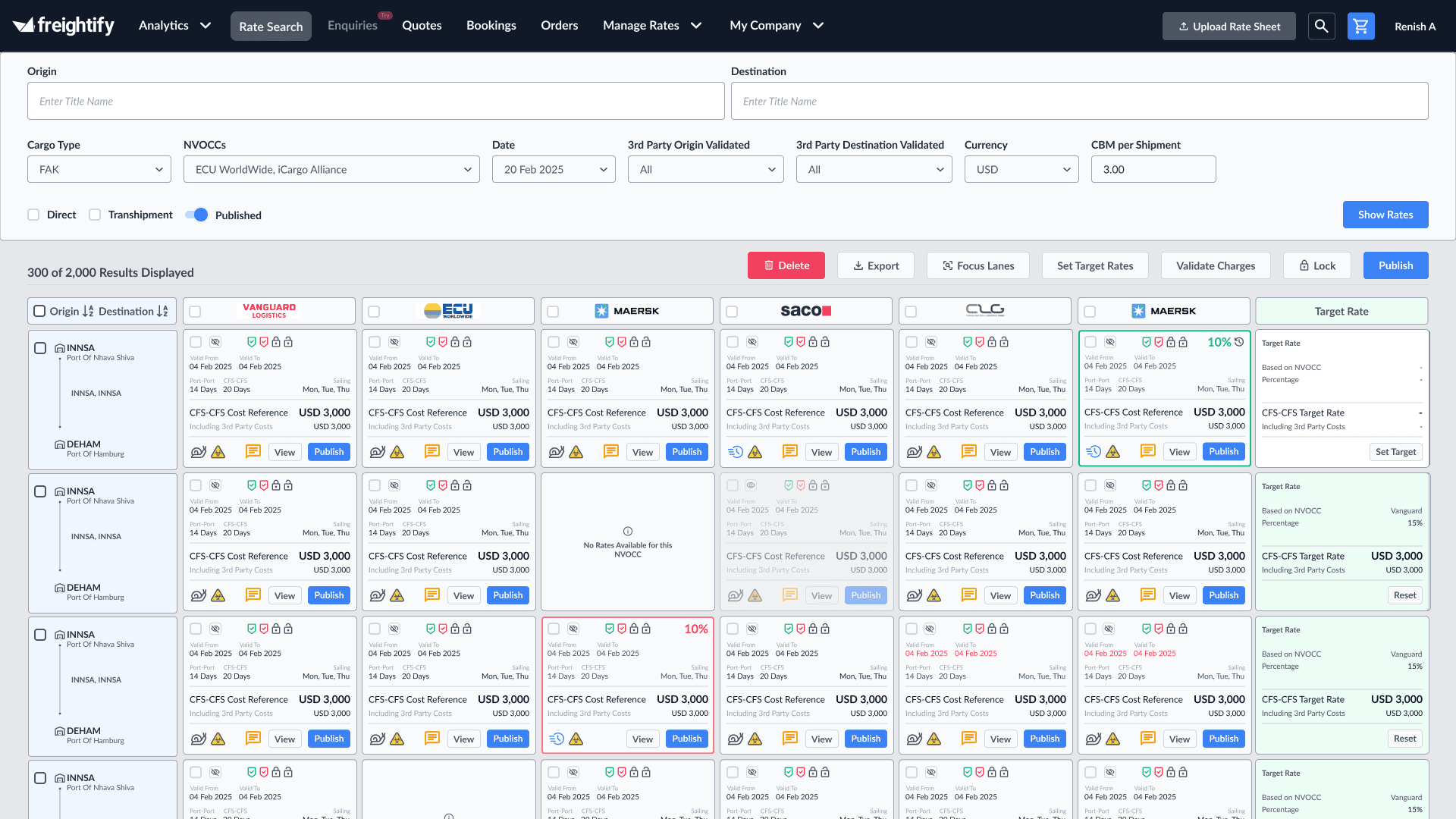
Your LCL Operation Has a Revenue Leak. Most Forwarders Never Find It.
Freight forwarders in the US and Europe lose LCL quotes daily — not from bad rates, but broken pricing workflows. See how the right LCL pricing software fixes this.
Wisor vs Freightify: Which Rate Management Platform Should You Choose? [2026]
Data-driven comparison based on 88 reviews. Implementation speed, multi-office capabilities, accuracy guarantees. 5-minute read.