
News
Stay ahead in 2025 with logistics procurement strategies that reduce risk, increase visibility, and leverage platforms like Freightify for smarter freight management.

Team Freightify
A good logistics procurement strategy should include setting short and long-term goals.
The rapid adoption of freight procurement tools like data-driven automation, real-time analysis and reverse auctions.
Staying ahead of market trends and incorporating flexible logistics procurement strategies is critical.
Using digital tools on platforms like Freightify helps optimize rate visibility and smoothen supply chain procurement.
Futuristic procurement strategies help reduce costs and risks.
The logistics industry is evolving with new technology and tools. Logistics procurement strategy will play a key role for businesses in 2025. Freight companies must rethink their freight procurement strategies amid soaring costs and geopolitical disruptions.
According to a 2025 study by the Hackett Group, the procurement analysis market will grow from $6.29 billion in 2025 to $14.59 billion by 2029. Over 60% of procurement businesses are planning an overhaul in automation and future-ready strategies.
List of Logistics Procurement Strategies for 2025
Logistics procurement strategy 2025 is not merely about cost-cutting. It needs to include value creation and intelligence, too. Here are a few freight procurement strategies that will help achieve excellence in 2025.
Chart Out Clear Goals
Aligning your overall business objectives with measurable and result-based goals is pivotal to managing freight procurement. Better planning to reduce lead time by improving supplier relationships is crucial. When your goals are clear, it helps you conduct better negotiations and track long-term performance.
Streamline Logistics Procurement
Freight procurement involves many manual tasks, including handling documents and comparing quotes from various vendors. However, you can automate these tasks through platforms like Freightify, which has a slew of automation features, such as digital contracts, real-time freight rates, and instant invoicing.
When processes are streamlined, delays are avoided, and accuracy is enhanced. Therefore, automation will become the bedrock of procurement strategic planning in 2025.
Let the Numbers Do the Talking
Data is the most critical aspect of logistics procurement strategy. Making your team fluent in data in 2025 is crucial. Data helps you analyze historical spending trends, evaluate which carrier is better and why, whether to choose spot or contract rates, identify process inefficiencies, route optimization and set supplier performance benchmarks.
Freightify helps visualize rate fluctuations and enhances supplier reliability. It also offers shipping trends, which can then be used to mitigate risks and make decisions based on real-time data.
Monitor Freight Procurement Trends
Various geopolitical events and climate disruptions impact the market. The freight market is volatile because several aspects influence pricing and availability. To negotiate smarter, it is extremely important to be regularly informed of regulatory changes and price shifts.
Reduce Costs with Reverse Auction Methods
Reverse auctions are a time-proven method of maintaining price transparency and promoting healthy competition. They facilitate real-time bidding for your business, which results in better rates and service terms.
Reverse auction speeds up the vendor selection process and offers value for money. You can save a lot, especially during high-volume freight procurements.
Integrate Supply Chain Management Strategies
Procurement does not function in isolation. It is the result of a seamless dance of interdependent processes, such as supply chain planning, operations and finance. In 2025, the only way to be efficient is to integrate supply chain management strategies like forecasting inventory and delivery schedules.
Once the entire logistics process is integrated, responsiveness increases and collaborating with suppliers becomes smoother. This helps control costs and increase reliability across the supply chain.
Contingency Planning is Freight Procurement
Given geopolitical events like strikes and pandemics, disruptions in the supply chain are now part of this world. Planning for such contingencies is crucial so these events do not affect your business. Having backup plans for carriers and routes is essential.
An efficient and fool-proof procurement plan must include time buffers and alternative logistics relationships. In 2025, it is important to be resilient and insulate against risk so the business does not suffer losses.
Embrace Digital Logistics Procurement Strategies with Freightify
Platforms like Freightify provide a competitive edge for logistics businesses. Freightify is a one-stop shop for comparing quotes, managing contracts, real-time tracking of KPIs, and giving instant access to freight rates.
If you wish to work smarter, not harder, Freightify is the right platform for you. With Freightify, you can digitize the entire logistics process from start to end, reducing costs, responding faster to market fluctuations, and building better supplier relationships.
Conclusion
Logistics procurement strategy is now future-ready with data-driven and digitally enabled methods. Your business will stay ahead if you define your goals clearly, automate systems, and adopt platforms like Freightify to control costs and establish reliable digital processes.
Freightify brings everything under one umbrella, empowering your business with real-time visibility and a streamlined procurement process.
FAQs
1. What is the biggest benefit of using Freightify for logistics procurement?
Freightify is a platform that offers all logistics solutions under one roof. It digitizes and simplifies rate comparisons, thereby helping minimize costs. This digitization helps save costs and ensures that your business always gets the best value.
2. How does automation improve logistics procurement?
Many procurement processes, such as invoicing and quotation, are lengthy and time-consuming. Automation drastically reduces process time and negates manual errors. This improves the overall efficiency of the procurement teams and, therefore, the business.
3. Why are reverse auctions gaining popularity in logistics procurement?
Reverse auction helps drive costs and offer value for money because all competitors are brought under one process. It also offers contract flexibility.
Frequently Asked Questions
Q: What is data-driven decision-making in freight forwarding?
It’s the process of using centralized, structured data and AI insights to drive procurement, pricing, and quoting decisions across global teams.
Q: Why is it difficult for freight forwarders to become data-driven?
Because most use legacy TMS systems and Excel workarounds that trap information in silos, making collaboration and transparency difficult.
Q: What is decision intelligence in logistics?
Decision intelligence connects data, people, and AI systems to continuously learn from transactions—transforming experience into scalable foresight.
Q: How does AI improve freight pricing and procurement?
AI learns from historical contracts, quotes, and bookings to suggest optimal pricing, detect anomalies, and improve margin consistency.
Stay updated with Freightify
Subscribe to our blog for the latest updates and insights delivered to your inbox.
Suggested Stories
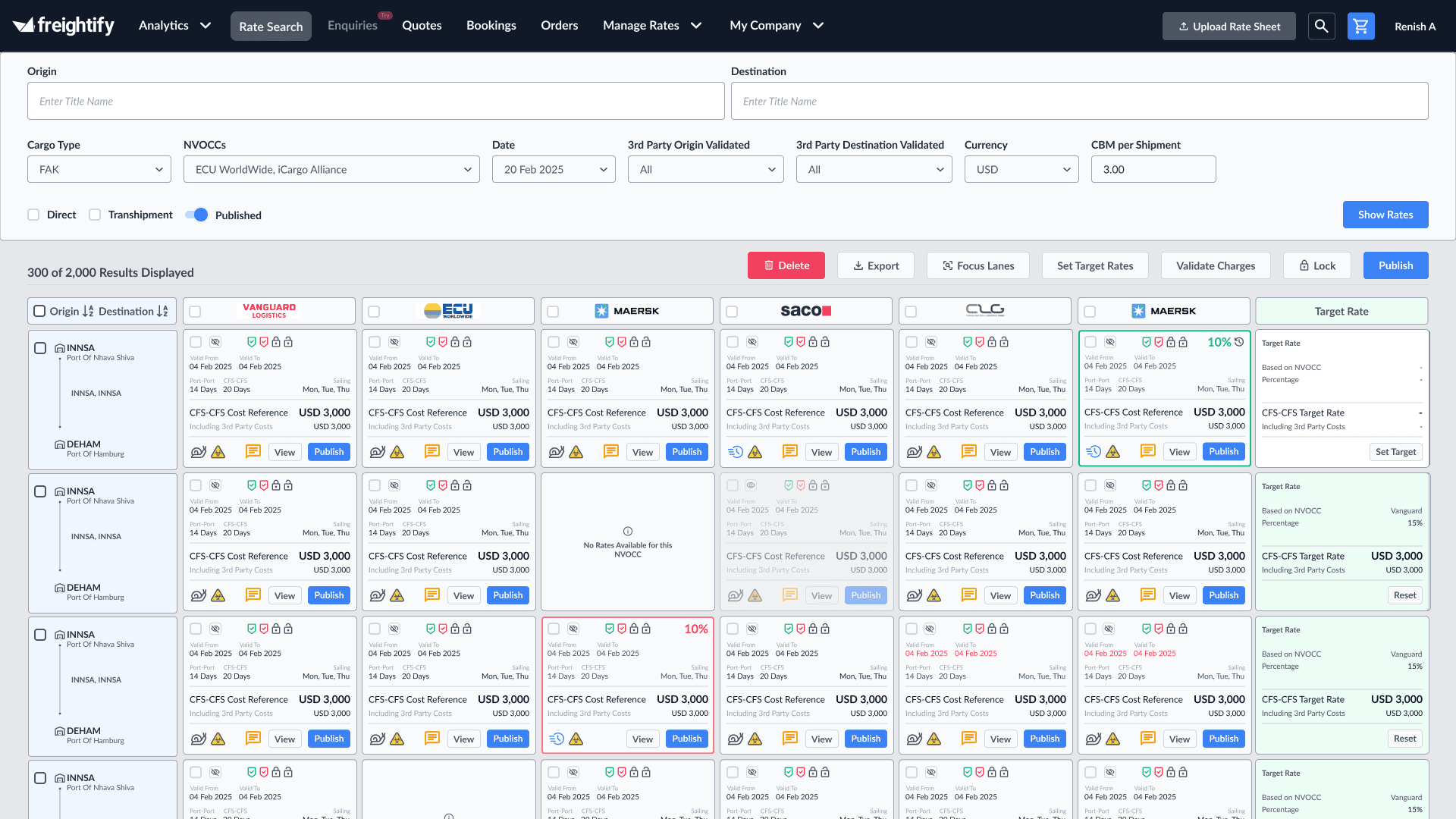
Your LCL Operation Has a Revenue Leak. Most Forwarders Never Find It.
Freight forwarders in the US and Europe lose LCL quotes daily — not from bad rates, but broken pricing workflows. See how the right LCL pricing software fixes this.
Wisor vs Freightify: Which Rate Management Platform Should You Choose? [2026]
Data-driven comparison based on 88 reviews. Implementation speed, multi-office capabilities, accuracy guarantees. 5-minute read.