
News
Spreadsheets can’t keep up because of manual errors, outdated rates, and poor collaboration. See why switching to a freight management platform is key to scaling your logistics.

Team Freightify
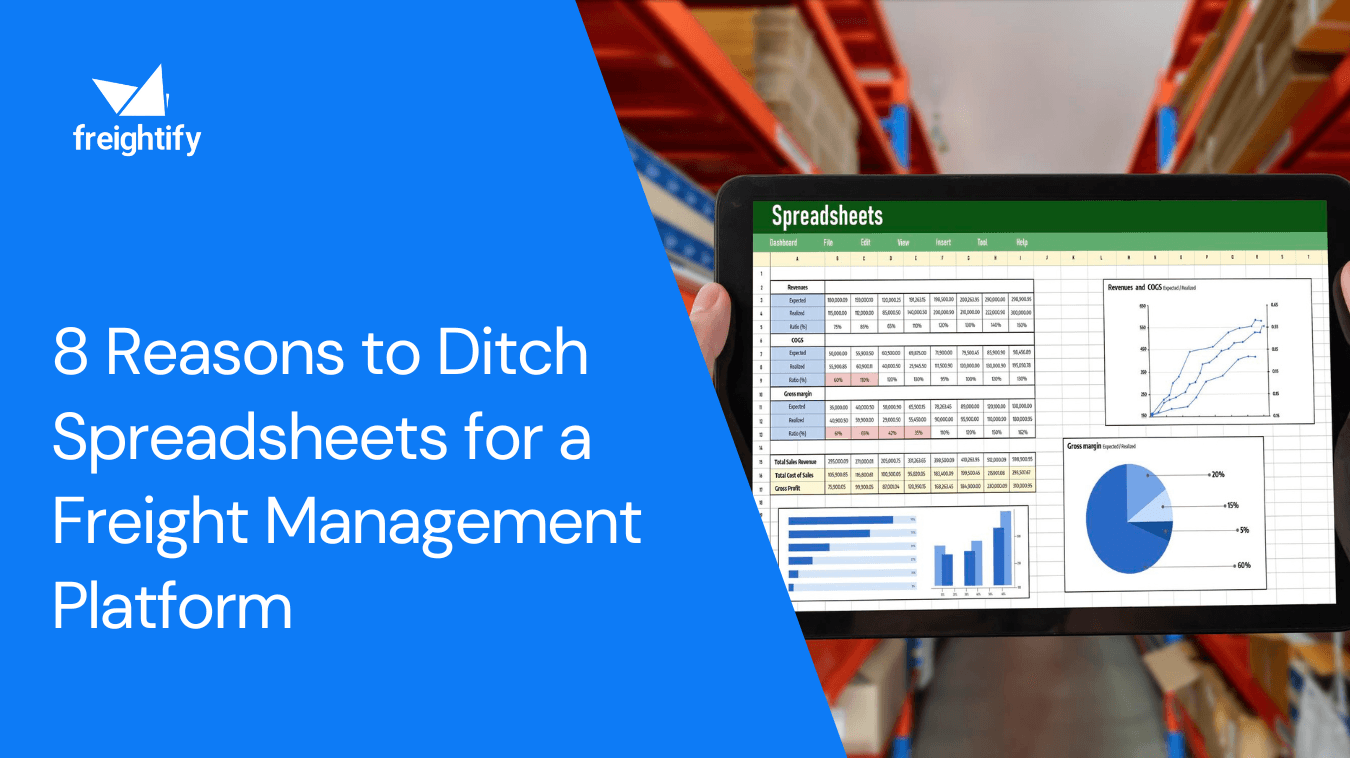
Spreadsheets are prone to manual errors and create inefficiencies.
Freight management platforms are entirely digital and automate the entire process.
Freight management platforms centralize all operations, thereby offering agility and better decision-making.
Freight platforms help scale operations and handle complexities in the process.
Are you still dependent on spreadsheets to manage your freight operations? If yes, then you may be at risk. Google Sheets and Microsoft Excel are easy to use and familiar. However, they are too simple to handle the complexities of modern logistics.
Today, there is an urgent need to transition to a more dedicated freight management platform. This is because the freight industry faces fluctuations in freight rates and global disruptions.
The global digital logistics market size is projected to grow from USD 37.64 billion in 2025 to USD 120.33 billion by 2032, indicating that an increasing number of businesses worldwide are opting for digital logistics.
1. Spreadsheets are prone to manual errors
Since data is entered manually in spreadsheets, human error can cause mistakes. A tiny decimal error or an inaccurate formula can result in losses of thousands of dollars. This can cause misbilling and incorrect rate comparisons.
On the other hand, platforms like Freightify automate the entire process of rate comparisons and calculations. They do not rely as much on manual calculations. This drastically reduces the risk of error.
2. They lack real-time rate visibility
Spreadsheets are not dynamic. They cannot provide real-time rates and make calculations on the go, and they lack the technology to update live rates. Using spreadsheets can result in outdated pricing and poor decision-making. In this industry, freight forwarders' rates can change daily, especially when global shipments are involved.
Because platforms like Freightify integrate directly with logistics providers, there is more real-time visibility of rate fluctuations across various modes of transport. This helps in making more informed decisions.
3. Poor collaboration and versions
Spreadsheets often get mixed up when teams share them across the company. Whenever one team shares with another, any edits made by the other team are overwritten, making it difficult to keep track of the latest versions.
Freight platforms don't work this way. They have a centralized cloud in which all the latest versions are stored. They can be duplicated or edited only with permission from the owners. This enhances accountability and transparency, reducing errors.
4. No automation of workflow
Automation is essential during processes like requesting quotes and confirming bookings. Spreadsheets cannot automate processes. They are static and must be manually altered.
Freight platforms automate processes such as comparing carriers and checking invoices. This avoids repeating tasks and delays in operations. When every step in the workflow is automated, it results in saving time and ensuring that nothing is missed.
5. Not scalable
As your business grows, you will need to manage multiple shipments, their routes, and vendors. There will be complex steps woven within each of these. Spreadsheets are incapable of handling such complexity. Freight platforms are robust and can handle extreme complexities. They can handle thousands of shipments monthly with speed and accuracy.
6. No insightful reporting
Spreadsheets cannot analyze data and give meaningful insights. They are dependent on manual calculations for shipping costs and profit margins.
Freight platforms offer a comprehensive range of services on a single dashboard. They conduct analytics and provide detailed reports on how to reduce costs and make informed decisions.
7. Isolated from other systems
Spreadsheets are isolated and cannot talk to tools like ERP systems and accounting platforms. They also have no idea about warehouse management and CRMs.
Freight management platforms utilize these tools and provide a robust API-integrated system for seamless data flow.
8. Don't lose your competitive advantage
Spreadsheets are inefficient and keep you at a disadvantage. In today's logistics, agility is crucial. Freight platforms quote faster and track shipments with real-time data. They don't make errors and deliver a better customer experience.
Conclusion
If your freight business is still using spreadsheets, you need to have switched to a digital platform like Freightify yesterday. That's how urgent it is to make your logistics business efficient and error-free. Make faster decisions and save on costs with a freight management platform.
Freightify enables you to digitize your entire workflow, providing complete control over rate procurement and real-time shipment tracking.
FAQs
Q1. Is it difficult to migrate from spreadsheets to a freight management platform?
No, it is not at all difficult to do so. Platforms like Freightify are leading in the industry and offer easy onboarding. They will integrate all your workflow into their API and ensure a smooth transition.
Q2. What types of businesses benefit most from freight platforms?
All businesses that need frequent shipments and global logistics benefit the most from these platforms. Most logistics businesses have a complex procurement process. These include freight forwarders and shippers as well.
Q3. How does a freight platform help reduce costs?
Freight platforms automate the entire workflow, ensuring there are no manual errors. They automate rate comparisons and bookings. They also provide analytics that help in making better decisions in the future.
Frequently Asked Questions
Q: What is data-driven decision-making in freight forwarding?
It’s the process of using centralized, structured data and AI insights to drive procurement, pricing, and quoting decisions across global teams.
Q: Why is it difficult for freight forwarders to become data-driven?
Because most use legacy TMS systems and Excel workarounds that trap information in silos, making collaboration and transparency difficult.
Q: What is decision intelligence in logistics?
Decision intelligence connects data, people, and AI systems to continuously learn from transactions—transforming experience into scalable foresight.
Q: How does AI improve freight pricing and procurement?
AI learns from historical contracts, quotes, and bookings to suggest optimal pricing, detect anomalies, and improve margin consistency.
Stay updated with Freightify
Subscribe to our blog for the latest updates and insights delivered to your inbox.
Suggested Stories
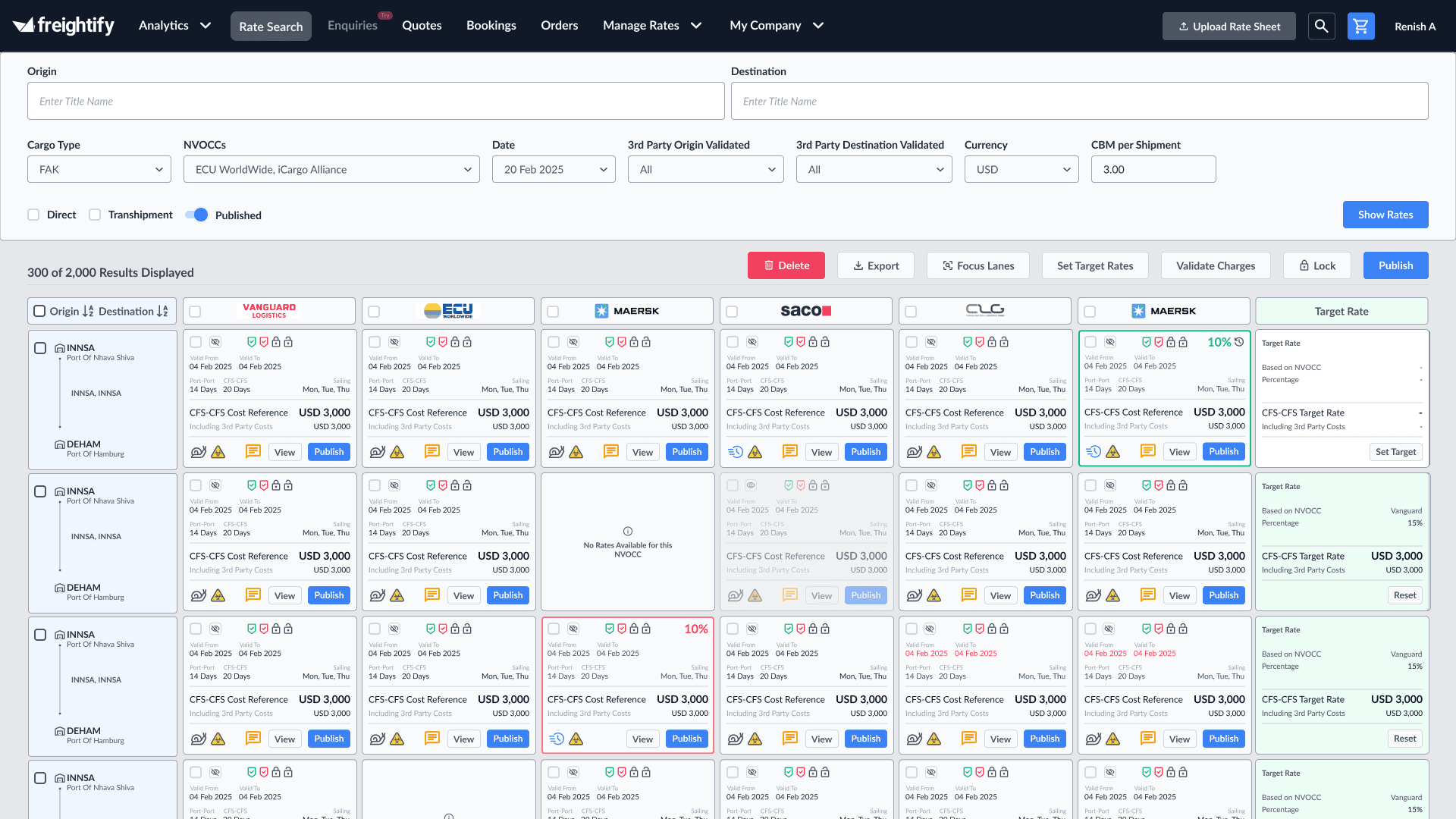
Your LCL Operation Has a Revenue Leak. Most Forwarders Never Find It.
Freight forwarders in the US and Europe lose LCL quotes daily — not from bad rates, but broken pricing workflows. See how the right LCL pricing software fixes this.
Wisor vs Freightify: Which Rate Management Platform Should You Choose? [2026]
Data-driven comparison based on 88 reviews. Implementation speed, multi-office capabilities, accuracy guarantees. 5-minute read.